Our Week at Art Basel Miami

welcome to our
SATURDAY EVENING POST
December 6th, 2025
Art Basel Miami began for us long before we ever stepped into the convention centre. It began with a conversation with our dear friend and colleague, the distinguished Canadian dealer and advisor Evelyn Aimis, whose decades of experience in the international art world are matched only by her generosity of spirit. She floated the idea that we should come down for Basel and stay with her, a suggestion delivered so casually that at first it felt like a possibility for another year. Yet anyone who knows Evelyn knows that she carries an infectious energy and a sense of delight that make ordinary suggestions suddenly feel like irresistible opportunities. The idea became a plan, and soon enough we found ourselves in Miami, welcomed into her home as if it were our own.
Her apartment was extraordinary. Every wall held something remarkable, a collection hung with the ease and confidence of someone who has spent a lifetime living with art. The view alone was unforgettable, but it was the atmosphere that stayed with us, a blend of vitality, comfort, and unmistakable artistic intelligence. Evelyn approached the week with characteristic precision. She organised our days with a schedule that made navigating Miami Art Week feel effortless. Her enthusiasm was constant, and she ensured we were always in the right place at the right time, that we met the right people, and that we were always well fed. Her boyfriend Martin was equally kind, patient, and quietly supportive, contributing to the sense that we had stepped into a home defined by warmth.
The days moved quickly. Evelyn introduced us to her circle of friends, including a lively contingent of Canadians who brought a sense of familiarity and camaraderie to an overflowing week. Some gatherings were planned in advance, while others unfolded by pure coincidence, the kind of delightful collisions that happen only during Art Week when the city fills with artists, collectors, and friends from every corner of the world. We found ourselves surrounded by highly accomplished, generous, and endlessly entertaining people who made each event feel personal. Even in the rare moments when there was time for dancing to the late night songs we sang in the kitchen, Evelyn proved to be the most stylish and spirited person in any room, with an ease of movement and confidence that only added to her charm.
At the end of the week we are returning home with a tattered Art Basel Miami map, phones filled with hundreds of photographs, and a memory album that far exceeded what we expected when this was still only an idea. The art was remarkable, but it was the experience of sharing it with Evelyn, Martin, and the friends we met along the way that gave the trip its substance. The week became a painting laden with conversations, discoveries, and unexpected reunions, and it reminded us that art is never encountered alone. It is something shaped by the company we keep, and in this case we could not have asked for better company.

Our first stop is The Margulies Collection. The Margulies Collection has been a cornerstone of Miami’s cultural landscape since the late 1990s, when real estate investor Martin Z. Margulies and curator Katherine Hinds began searching for a space to present the collection publicly. They settled on a large warehouse in Wynwood in 1999, long before the neighbourhood developed into the arts district it is today. The Warehouse opened to the public soon after and became one of the earliest and most influential cultural anchors in Miami. Margulies has been collecting since the 1970s, focusing on contemporary and twentieth century art with an emphasis on sculpture, photography, large scale installation, and significant European and American voices.
The visit begins in the Paladino room, which contains important works by Mimmo Paladino and establishes the blend of Italian transavantgarde and international contemporary work that threads through the collection. Over the years, Margulies expanded both the physical space and the scope of the collection, which now spans tens of thousands of square feet and includes holdings by artists such as Willem de Kooning, George Segal, Ana Mendieta, Olafur Eliasson, Ernesto Neto, and many others. The history of the Warehouse is tied to Miami’s own evolution as an international art destination. Each year the space is reinstalled for Miami Art Week, and the exhibitions often include landmark presentations that are rarely seen outside of major museums.
The visit concludes in the immense Anselm Keefer rooms, which represent one of the most ambitious permanent installations of Keefer’s work in North America. The collection has always been devoted to scale, ambition, and a belief that private collecting can serve a broad public mission. Marty Margulies himself continues to be actively involved and remains a charismatic presence, offering candid and often humorous insights into the works he has championed for decades.


Art Miami was the first fair we attended this week, and although the fair has long been known as a reliable commercial anchor during Miami Art Week, this year’s edition felt underwhelming. Only a small number of booths distinguished themselves with compelling presentations, and the fair’s overall tone leaned toward the familiar, covered with a fair amount of glitzy diamond dust, rather than the seriousness we were hoping for. Still, there were moments of clarity among the repetition, which reminded us that even in the most established fairs there are always pockets of ambition waiting to be found.


NADA Miami, presented by the New Art Dealers Alliance, was founded in 2003 and is one of the oldest independent fairs operating during Miami Art Week. NADA itself is a non profit collective of galleries, curators, artists, and arts professionals whose goal is to support new voices in contemporary art and to foster a more sustainable gallery ecosystem. The Miami fair remains the organisation’s flagship event and has historically been the launching point for many galleries that later establish strong international profiles.
NADA is known for presenting work at very early stages of artists’ careers. The atmosphere is less formal than the large commercial fairs, and the booths are often modest in scale, which allows galleries to take risks with installation and curation. Over the years the fair has built a reputation for discovering talent. Many artists who now appear at Art Basel or in major museum exhibitions were first shown at NADA. The fair has also served as an important platform for artist run spaces and young international galleries that may not yet have the visibility or financial resources to appear at the larger fairs.
NADA’s history is closely tied to the development of Miami’s contemporary art scene. It has offered a counterweight to the commercial intensity of the week and continues to function as a barometer of what younger generations of artists are exploring. Although the work can be uneven, the fair often reveals the first signs of new movements, shifts in material practice, and stylistic tendencies that later surface in more established venues.


Untitled Art Fair was founded in 2012 as a response to the growing density and commercial emphasis of Miami Art Week. Rather than offering an open admission model, Untitled introduced a fully curated approach to the art fair format. Every participating gallery and every solo or group presentation is selected by an independent curatorial team, and the architecture of the fair is conceived to prioritise natural light, clear sightlines, and uncluttered presentation. The fair is housed in a temporary structure built directly on the beach, which has become part of its identity. Its mandate is to foreground emerging and mid career artists and to create an environment where the work can be seen without the overwhelming scale that characterises the larger fairs.
Over the past decade Untitled has gained a strong reputation for introducing new voices and for giving smaller international galleries a platform that is both serious and accessible. The tone of the fair is quieter and more reflective than many of the week’s other venues. The work tends to favour conceptual clarity, material experimentation, and contemporary photography.


Art Basel Miami was the centre of the week and the fair that shaped the rhythm of everything else we saw. This year’s edition brought together more than 270 galleries from around the world, filling the Miami Beach Convention Centre with presentations that ranged from 20th century masters to the most current developments in contemporary practice. The scale alone required stamina. Basel remains the fair where a visitor can move from museum quality historical works to ambitious new projects within a single aisle, and that range is part of what makes the experience so compelling.
Basel still functions as a barometer for the year ahead. The strongest booths demonstrated a level of curatorial discipline that distinguished them from the more commercial tone found elsewhere during the week. Painting remained dominant, though there was also a noticeable presence of innovative sculptural work and installations that pushed beyond conventional formats. Throughout the fair there was a sense of clarity and ambition that reminded us why Basel continues to hold such influence.

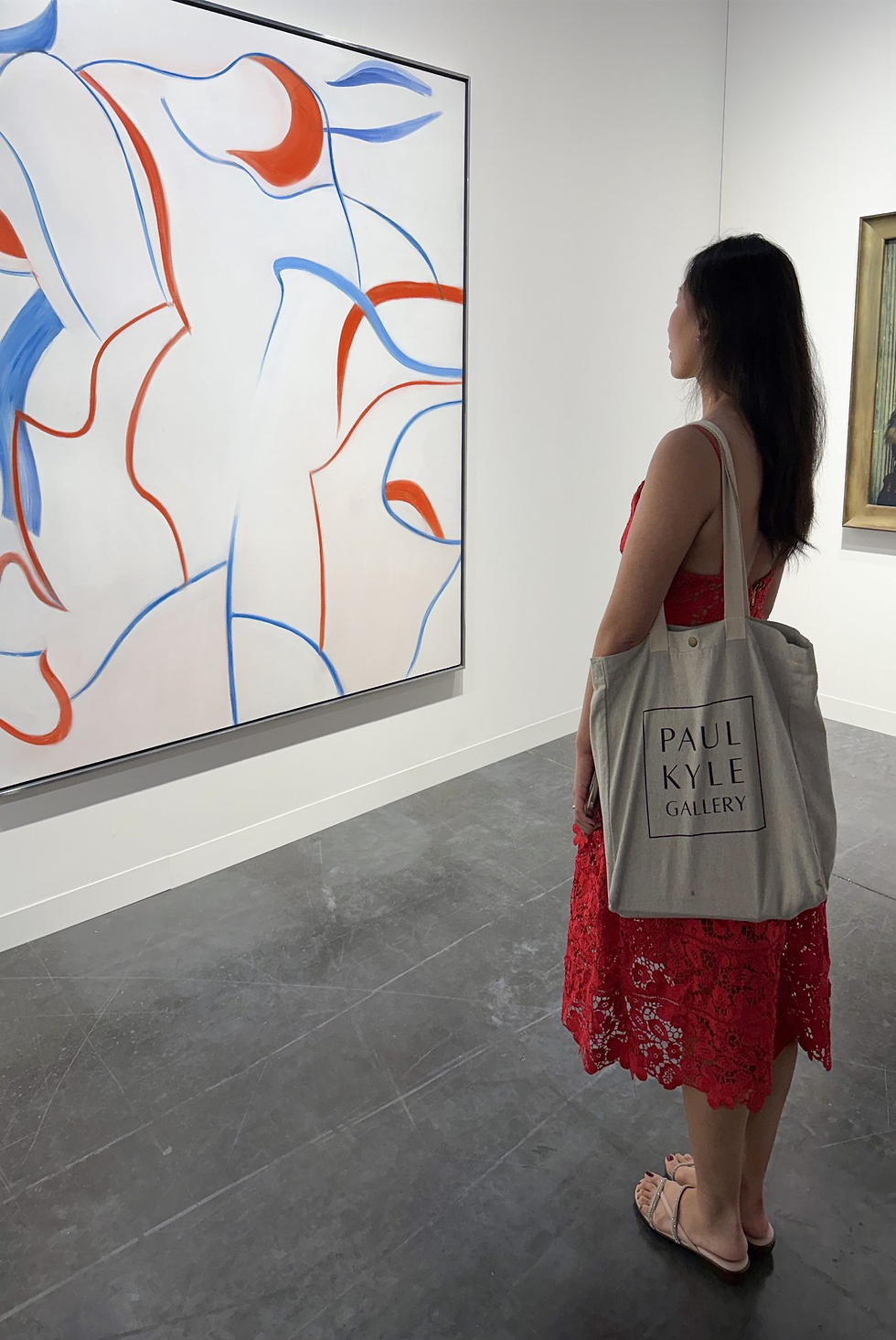


Viewing The Rubell Museum was a true highlight of the week. The Rubell Museum has its origins in the early 1980s, when Don and Mera Rubell began collecting art seriously while living in New York. Their interest was guided by a simple principle. They collected from studio visits, supported artists early, and purchased deeply rather than selectively. By the 1990s the collection had grown significantly, and in 1993 they opened the Rubell Family Collection in a repurposed Drug Enforcement Administration building in Miami’s Wynwood district. Over the next 26 years the RFC became one of the most studied private collections in the world and played a major role in shaping the identity of contemporary art in Miami.
In 2019 the Rubells relocated the collection to a newly renovated complex in Allapattah, a project designed by Selldorf Architects. The new museum occupies six former industrial buildings connected into a single storey campus of galleries, research spaces, a courtyard, and a restaurant, creating an environment that is both expansive and highly controlled. The Rubells have always curated their collection with a strong sense of historical continuity. They supported artists such as Jean Michel Basquiat, Keith Haring, Jeff Koons, Cindy Sherman, and Richard Prince long before these artists became fixtures of the international canon. Their collecting has continued with equal conviction across generations and geographies.
During our visit we had the pleasure of meeting Mrs. Rubell, whose warmth and generosity set the tone for the experience. The museum’s architecture guides visitors through a maze like layout, producing a rhythm of surprises and shifts in scale. The lighting is exceptionally well handled, giving each work a clean, museum quality presence. The exhibitions currently on view span painting, sculpture, installation, and photography, showing the full breadth of the Rubell commitment to both established and emerging artists. The museum remains a model of how a private collection can shape public understanding of contemporary art, not only through the depth of its holdings but through the care taken in how the work is presented.


Dogs at art fairs do not browse, they judge, and Rothko would have judged right along with them.


After all, it is sunny Miami, there is sun-kissed water, lush greens, and palm trees, all for my enjoyment, and as Evelyn would say: ‘What’s a girl to do’!


We also paused this week to reflect on the passing of Frank Gehry, one of the most influential architects of the past century and a figure whose work reshaped how we understand form, movement, and the expressive possibilities of the built environment. Born in Toronto and celebrated internationally, Gehry transformed cities with buildings that felt alive, from the Guggenheim Bilbao to the Walt Disney Concert Hall. His architecture was never static. It carried the same sense of invention and risk that we value in the artists and architects we represent. His death marks the end of an extraordinary era, but the generosity of his imagination will continue to shape the way we see space, structure, and possibility for generations to come.

CURRENT
GROUP EXHIBITION


CONTACT US
4-258 East 1st Ave,
Vancouver, BC (Second Floor)
GALLERY HOURS
Tuesday - Saturday,
11:30 AM - 5:30 PM
or by appointment
我们提供中文服务,让我们带您走入艺术的世界。