Artspeak and the Fear That Everyone Else Understands

Updated: Aug 25
welcome to our
SATURDAY EVENING POST
August 8th, 2026
By Diamond Zhou
Written with time, thought, and a human pulse.
There is a particular kind of panic familiar to anyone who spent time in art school, or has simply taken the trouble to read a substantial amount of art writing. It usually begins halfway through a text. You read a paragraph once and understand almost nothing. You read it again, more slowly. Every individual word appears to be English, occasionally joined by words that seem to have been invented specifically for the occasion. The grammar appears legitimate, the writer proceeds with complete confidence, and gradually you begin to suspect that the failure is yours. After another reading, you become almost certain of it. Perhaps everyone else has acquired some advanced form of comprehension that somehow escaped you.
Art school makes this feeling worse because the confusion becomes public. The following morning, someone in the seminar says they were interested in “the relationship between the body and the archive.” Another person introduces precarity. Someone else mentions late capitalism. Everyone nods, so you nod too. Occasionally, somebody asks the forbidden question: “What does [blank] actually mean?” The concept is reintroduced in slightly different language, a few nouns change position, something involving power is mentioned, and the discussion continues without anyone having quite answered the question, or, sometimes, having understood it in the first place. Perhaps this is an unusually personal experience, but even now I occasionally wonder whether my perplexity has less to do with the writing than with some underdeveloped capacity for comprehending the English language.
In 2012, Alix Rule and David Levine gave a name to one version of this professional dialect: International Art English. They studied the language of contemporary-art press releases distributed through e-flux and identified recurring vocabulary, syntax and rhetorical habits. The phenomenon was not simply a collection of pretentious words. It had developed through the international circulation of contemporary art, translated theory, academic language and a professional culture in which certain forms of expression came to signify seriousness and belonging.
The vocabulary is instantly recognizable. Artists rarely show, paint, arrange, compare, remember or refuse. They interrogate, destabilize, activate, negotiate, complicate, problematize and subvert. Boundaries become liminal, histories are embodied, spaces are performative, objects acquire agency, mixed things become hybrid, and relationships, once advanced to a graduate programme, become relationalities. None of these words are automatically meaningless, because many belong to precise intellectual traditions. Trouble begins when the terminology can be detached from the artwork without changing the sentence very much.
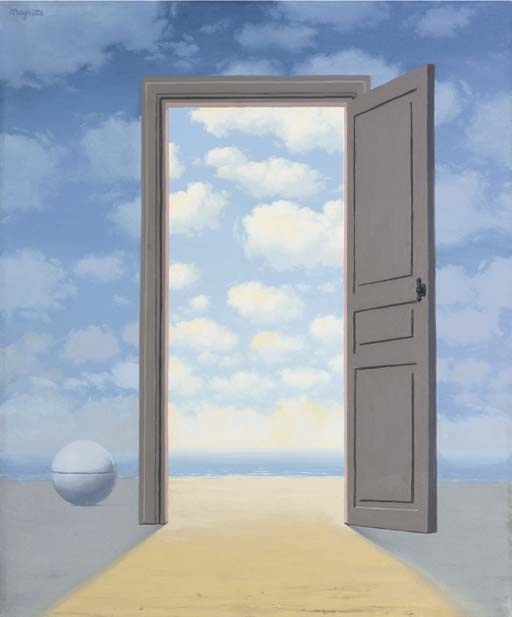
A doorway becomes a threshold, the threshold becomes liminal, and the liminal threshold destabilizes a hierarchy. By the time the paragraph ends, nobody remembers who opened the door. What does this doorway have to do with the work we are examining, or with art at large?
What Are We Supposed to Be Looking At?
I keep returning to art critic and writer Robert Hughes when I think about this. Hughes could be cruel, sweeping and spectacularly certain of himself, but his criticism remained attached to the act of looking. While making The Shock of the New, he recalled his producer Lorna Pegram repeatedly interrupting him with the question, “It’s a clever argument, Bob dear, but what are we supposed to be looking at?” The question presents an impressive argument without rejecting intellectual ambition, because it simply insists that criticism eventually return our eyes to the thing under discussion.
The question becomes particularly interesting around conceptual and Minimalist art, where context can be part of the work rather than merely its surroundings. Brian McPhee’s essay Art or ‘art’ pushes this irritation much further, arguing that modern institutions have expanded the category of art while reducing the importance of traditional craft. I do not necessarily and completely share in his conclusion that manual skill should determine what qualifies as art, because too much important twentieth- and twenty-first-century art would disappear under that rule. His irritation with the institutional machinery around art though, is valid, when an object becomes physically ordinary, explanation can become disproportionately powerful.

Carl Andre’s Equivalent VIII consists of 120 firebricks arranged directly on the floor in two layers. Andre made eight different configurations using the same number of bricks, keeping their mass and volume equivalent while altering their shape. The sculptures reject the pedestal, put industrial material into the viewer’s own physical space, and make arrangement and context inseparable from what the work is. Hughes famously argued that a Rodin displaced into a parking lot would remain recognizably a misplaced Rodin, while Andre’s bricks outside the museum could revert to being bricks.
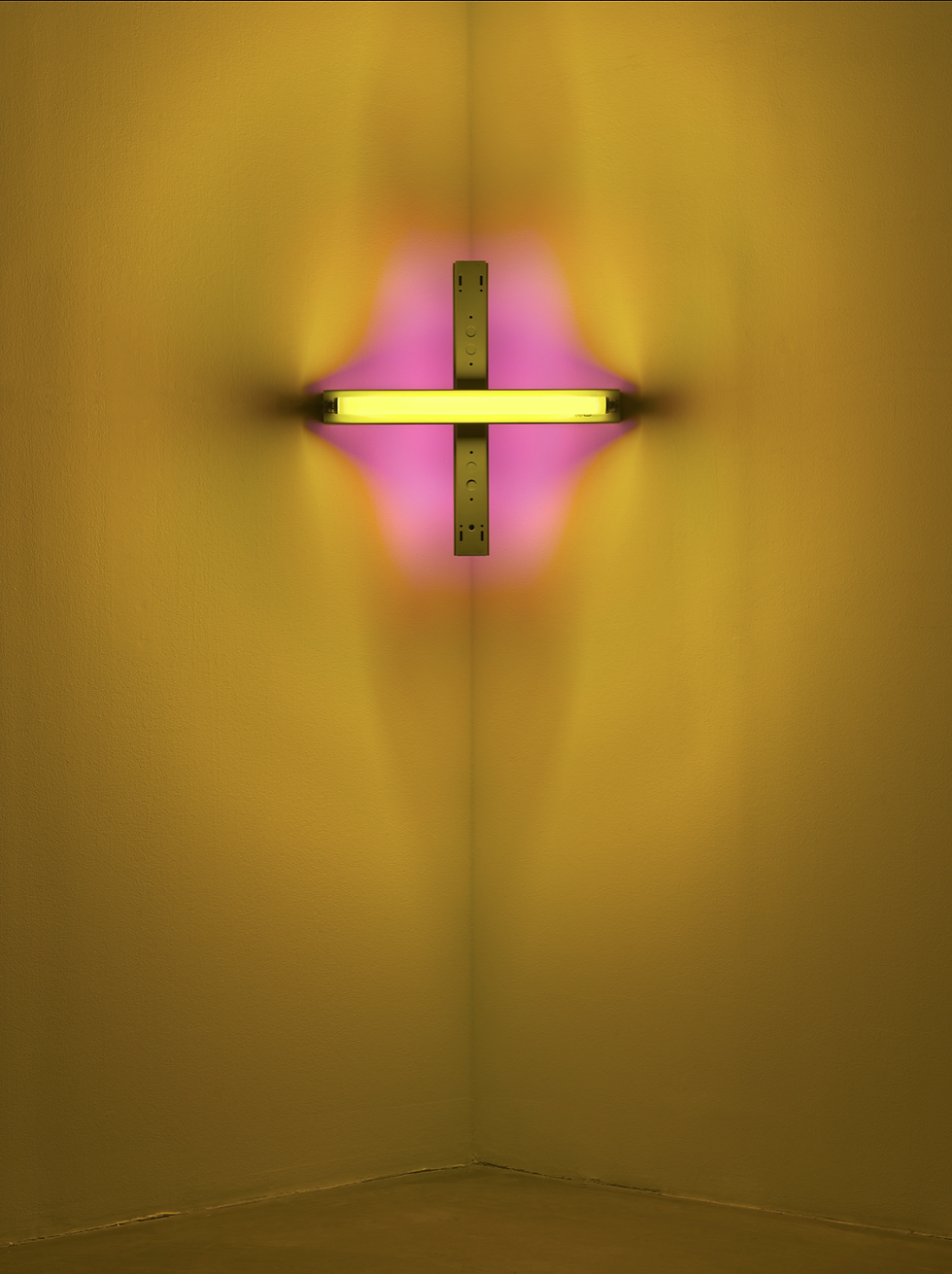
McPhee takes that vulnerability as evidence against a great deal of modern art. Context can transform an object, but criticism then assumes a greater responsibility. If an artwork asks us to reconsider a pile of bricks, a urinal, a fluorescent tube or a gesture performed on a street, the writing around it should illuminate the conditions that make the reconsideration worthwhile. It should not merely issue a definitive intellectual certificate of authenticity.
Welcome to the Translation Desk


In a 2021 essay for MoMA on Tetsumi Kudo’s 1972–73 installation Pollution—Cultivation—New-Ecology Underground, writer Ken Yoshida connects the work’s artificial post-apocalyptic ecosystem to displacement, immigration, national belonging and Kudo’s own life between Japan and Europe.
“a pseudo-mechanical underground vessel tunneling the uncertain depth of allochthony to flee the terrestrial politics of autochthony.”
Translation: Kudo imagines a polluted world in which nothing belongs entirely where it originated. Artificial plants, circuitry, human organs and synthetic materials coexist without a stable division between nature and technology. Yoshida connects this displaced environment to Kudo’s experience between Japan and Europe and to the difficulty of attaching identity securely to homeland, cultural purity or nationality.

In a Serpentine essay on Seba Calfuqueo’s 2020 video KOWKÜLEN (Liquid Being), Macarena Gómez-Barris connects the non-binary Mapuche body, colonialism, water privatization and the extraction of natural resources in Chile.
“The earth’s depletion depends upon the somatic labor of the racialized female and trans-femme body. Extractive capitalism operates through the trans-eco-geno-feminicidal capitalist impulse.”
Translation: Colonial exploitation acts upon bodies as well as land. Calfuqueo connects the taking of resources from Indigenous territory with colonial attempts to regulate Indigenous people, gender and sexuality. By placing their non-binary Mapuche body within water and landscapes shaped by forestry, privatization and colonial occupation, the work brings environmental violence and violence against Indigenous identities into the same political history.

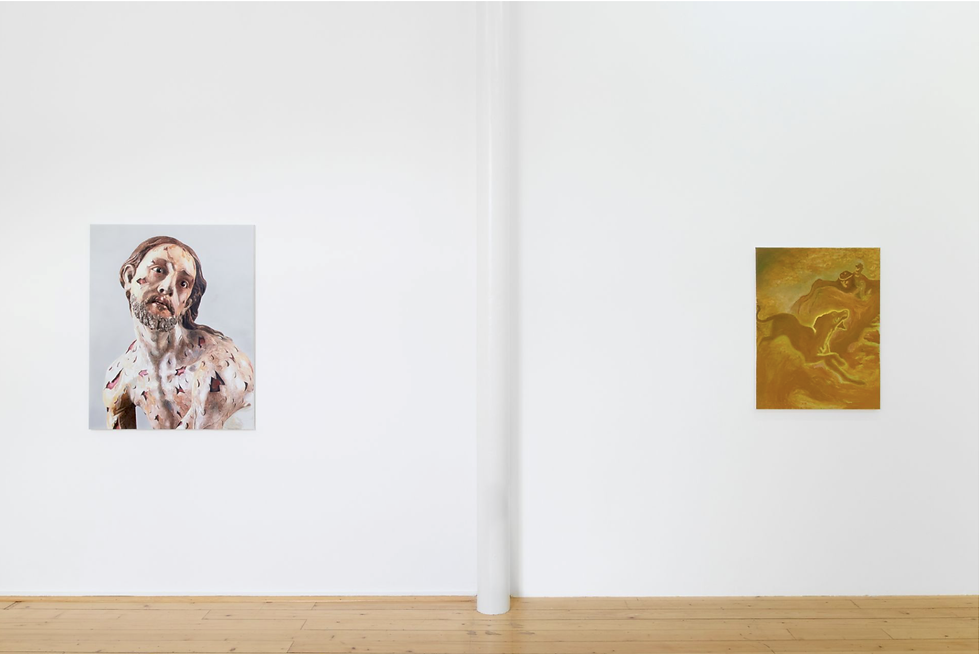
The exhibition text for Hamishi Farah’s 2021 show Dog Heaven 2: How Sweet the Wound of Jesus Tastes at Fri Art Kunsthalle considers Black representation, Christian imagery of suffering, Afropessimism and the relationship between representation and the category of the human.
“representation itself flirts with an atemporal immanence upon arrival at a Blackness understood outwardly as a concept that negatively structures human capacity.”
Translation: Farah is interested in more than whether Black people appear in images. The exhibition asks how Blackness has historically been used to define the limits of who is recognized as fully human. By bringing contemporary Black subjects into relation with recurring Christian images of wounds, sacrifice and suffering, the work examines how representation has helped organize ideas about suffering, humanity and social belonging.
Clear Language Does Not Produce Simple Art
The answer is not to force every artist and critic into the language of an instruction manual. Some of the most elusive conceptual art begins with remarkably lucid propositions.

Yoko Ono’s Grapefruit, first published in 1964, contains more than 150 instruction works. The actions range from possible to impossible and often depend on the reader’s imagination for completion. One instruction asks us to “Send a smell to the moon”; another tells us to “Step in all the puddles in the city.” The language is almost childishly direct, while the implications are not. The artwork can exist as a printed instruction, an imagined action, an actual performance, or some unstable combination of all three. Ono removes linguistic difficulty and leaves the conceptual difficulty untouched.

Francis Alÿs does something similar in Paradox of Praxis 1 (Sometimes Making Something Leads to Nothing) of 1997. He spent roughly nine hours pushing a block of ice through Mexico City until it melted completely, compressing the action into a short video. The description takes a sentence. From it come questions about labour, productivity, futility, time, informal economies, urban life and the peculiar human habit of investing enormous effort in things that disappear. The artist’s own site identifies the action just as plainly: Mexico City, 1997, a block of ice, and eventually nothing.
A friend and I recently found ourselves discussing the peculiar resources different languages give their writers. Chinese is the language we both know, so the conversation naturally became a comparison between Chinese and English, particularly the different ways each language can create and accumulate meaning. I would not claim that Chinese is simply “more complex” than English; languages organize complexity differently.
In Chinese, a word can carry associations that extend well beyond its immediate dictionary definition. Characters combine into compounds whose components remain visible, while centuries of poetry, philosophy and historical usage give apparently similar words very different resonances. A good writer is therefore choosing not only the right meaning, but the right inheritance.
English stores meaning differently. Its vocabulary is historically promiscuous, built from Germanic foundations and enormous layers of French, Latin, Greek and other borrowings. Its expressive power often comes from combination: syntax, rhythm, register, metaphor, and the almost indecent number of words available for recombination.
Perhaps this is also where artspeak found its opportunity. Claude Lévi-Strauss used the figure of the bricoleur to describe someone who works with heterogeneous materials already at hand, rearranging inherited fragments for new purposes. Contemporary art writing has accumulated just such a box of theoretical parts: liminality, performativity, materiality, embodiment, hauntology, hybridity, precarity, relationality. Most began within specific intellectual arguments. As they travelled through universities, catalogues, grant applications and press releases, they became increasingly portable.
The problem is not borrowing. Writers have always made new things from inherited language. The problem begins when those fragments substitute for the thinking meant to arrange them. Put embodied beside knowledge, add liminal before space, let the work interrogate something, and an ordinary observation can acquire the appearance of “theoretical writing” before anyone has established whether the pieces really belong together.
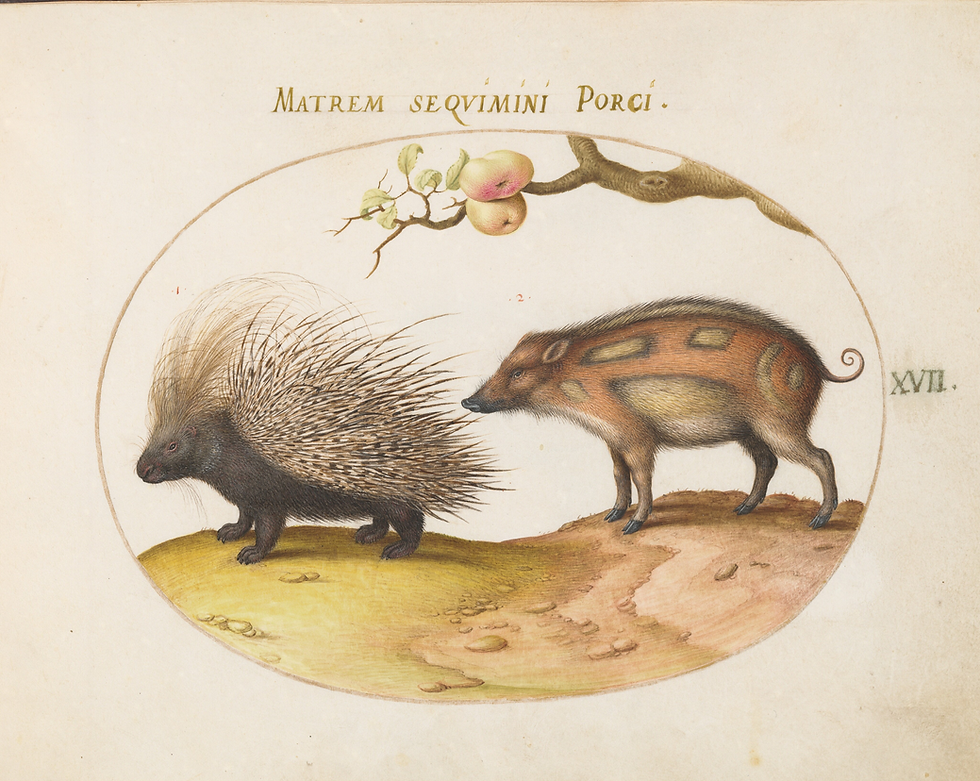
Discussing the difficulty of governing New York, Mike Murphy said on CNN: “Running the city of New York is like massaging a porcupine. A year later, you wonder what happened. You have no fingers left.” The phrase stayed tucked away in my notes. It does not lead us through a sequence of abstract concepts and ask us to live through the difficulty of the journey. Tenderness, danger, proximity, resistance and misguided optimism arrive together in one perfect image. The absurdity is fantastic, and the metaphor leaves a profound residue in my mind that would have otherwise escaped.
This is the distinction I want to preserve when arguing against artspeak. I do not want art writing to become plain, bloodless, or obedient. Artspeak becomes most oppressive when it reverses that obligation. The reader is made responsible for the writer’s opacity, while the artwork recedes behind a veil of professional “fluency”, or maybe “redundancy”.
Robert Hughes was hardly a minimalist stylist. His verbal energy repeatedly returned the reader to an object, a visual relation, a historical circumstance or an argument one could actually contest. Vivid language can alter the way we think about things without asking us to treat the solution to difficulty as a proof of intelligence.
The same freedom should remain available to contemporary criticism. A critic may need theory, a curator may need a technical term, a writer may use metaphor, humour, contradiction. The reader can be asked to work and sometimes should be. What should eventually emerge from that effort is a more profound understanding and a better reason to look again.
CURRENT EXHIBITION


CONTACT US
4-258 East 1st Ave,
Vancouver, BC (Second Floor)
GALLERY HOURS
Tuesday - Saturday,
11:30 AM - 5:30 PM
or by appointment
我们提供中文服务,让我们带您走入艺术的界。


