Beauty

welcome to our
SATURDAY EVENING POST
February 7th, 2026
By Diamond Zhou
Beauty begins as a felt event: a bodily uptake of a form, a face, a sound, a gesture, a landscape, a sequence of words. The experience is a disturbance of attention, a change in pacing, a moment of absorption. It can include pleasure, but it is not reducible to pleasure. It can include calm, but it frequently includes something closer to intensity: the sense that one is briefly oriented or disoriented by something that does not need to be explained.
This is not anti-intellectual; it is a demand that intellectual analysis be faithful to the phenomenon.

Immanuel Kant refuses to treat beauty as a property like weight or colour. A judgment of beauty is anchored in feeling, yet when we call something beautiful, we typically do not mean “I like it,” we mean that it merits attention, that it is not merely a personal preference, that it is in principle shareable. This is the tension: beauty is felt, but it makes a claim beyond the personal. Anyone who has written seriously about art has relied on this tension, whether they admit it or not, a critic is not a meteorologist of preferences, a critic is attempting to articulate conditions under which an experience becomes possible and reasons why it matters.
If beauty were only cultural scripting or if it were only biology, it would be easier. Beauty exists precisely because it sits between these opposites: it is conditioned and yet not completely manufactured; it is embodied and yet not merely instinctual; it is historical and yet capable of crossing histories. The task is not to “solve” beauty but to describe the machinery of its arrival without stripping it of authority or mystery.
The intrinsic versus extrinsic values tracks two different ways beauty intensifies. Some works produce a strong response through perceptual organisation alone: relations of form, rhythm, colour, proportion, cadence, timbre, weight, scale. Other works become beautiful through added knowledge: the function of an object, the difficulty of its making, the moral charge of its context, the biography that clings to it, the social recognition it confers. In practice these interact, so the question is not which is “real” beauty, the question is how the felt event is generated and how it is manifested.

The most obvious evidence that beauty is not fixed is the history of standards: bodies, faces, dress, ornament, hair, posture, skin, the shifting semiotics of class and desirability. Yet the fact that standards change does not entail that beauty is arbitrary. It means that beauty is always produced at the intersection of what human beings can perceive and what societies decide to reward.
Begin with the perceptual fact that we are not blank slates. For most of us, we share a sensory apparatus with stable habits: attention is drawn to contrast and edge, to legible structure, to rhythm, to pattern with variation, to forms that hold together without becoming monotonous. These tendencies do not dictate a single global ideal, but they do establish a common ground on which culture can work. Aesthetic life is not invented ex nihilo; it is built on an organism with limits, preferences, tolerances, and thresholds. This is part of why aesthetic pleasures can travel across contexts more easily than many people expect, even when meanings differ, perceptual intelligence can still register.
But perception alone never explains standards, because standards are not only about what is pleasing to see. They are about what the body is made to signify. Societies recruit appearance into systems of recognition. They turn bodies and styles into readable signs of rank, belonging, virtue, modernity, health, fertility, leisure, discipline, wealth, and sometimes refusal. In this sense, an ideal can shift quickly not because humans suddenly perceive differently, but because the social world changes what it needs beauty to communicate.
Material conditions deepen this. Scarcity and abundance do not merely affect what people eat; they affect what bodies mean. In contexts where food scarcity is common, visible abundance can signify security, resilience, and insulation from risk. In contexts where abundance is assumed and status competition intensifies, thinness can become a sign of control, aspiration, and access. These are not universal laws and they are never innocent, but they help explain why “fat versus thin” is rarely just a matter of taste. It is the visible outcome of what a society fears, what it rewards, and what kinds of lives it wants to present as admirable. Media does not simply show standards; it standardises them. Photography, cinema, advertising, and now algorithmic recommendation systems compress ideals into portable images repeated until they begin to feel like nature.

This is where prehistoric images are not quaint footnotes, but clarifying evidence. The Venus of Willendorf is often reduced to a simplistic story, “fat was beautiful,” “fertility idol,” and so on. But its deeper interest lies in what it reveals about standards as such: bodies have long been rendered as arguments about value, not merely recorded as appearances. The figurine is a selective amplification, an intensification of certain features into emphasis. Whatever its original function, it demonstrates that ideals are made under pressure: perceptual emphasis, cultural meaning, and the social uses of bodies in a world where survival, reproduction, and belonging were not abstractions. The lesson is not that the past endorses any present ideal. The lesson is that bodies have always been recruited into aesthetic regimes that are simultaneously regimes of meaning.

Take the Venus de Milo as an emblem. It is often invoked as a symbol of what “they” found beautiful “back then.” Yet the statue’s authority as a global ideal is profoundly shaped by modern institutions: discovery, museum acquisition, nineteenth-century classicism, the formation of a canon, the reproduction of images, and the prestige economy of “Greek beauty.” The statue is certainly an extraordinary object, but the status of the object as a universal benchmark is not merely a neutral inheritance from antiquity. It is a modern construction that has been taught, repeated, and defended. In other words, what people are responding to is never only the carved marble; they are also responding to the historical weight attached to it. This is not a debunking, but a reminder that even the most revered ideals are partly institutional achievements.
That observation should change how we speak about contemporary standards. The question is not whether our standards are more “false” than earlier ones, the question is how they are produced, whose interests they serve, and what they do to bodies.
Many Western viewers instinctively interpret neck rings and facial piercings either as pathology or as primitive “beauty work” aimed at a universal spectator, but both interpretations are too crude. In many societies, body modification functions as a social grammar. It marks age, status, belonging, maturity, endurance, marriageability, lineage, ritual obligation, and sometimes spiritual commitment. The modification is not merely an attempt to approximate an abstract ideal of attractiveness; it is an inscription of the person into a shared symbolic order. It is “beauty” in the sense that it is an aesthetic and affective regime, but it is not the same kind of beauty as an image designed for detached viewing. It is closer to what you might call communal aesthetics: the body as a site where social meaning becomes visible and therefore felt.

This matters for a deeper reason, it shows that beauty is not always organised around the modern liberal subject who chooses preferences privately. Beauty can be a public practice, shaped by obligations and recognitions that precede the individual. A great deal of modern beauty culture is framed as personal choice, self-expression, empowerment, or optimization. But the social grammar is still there. One can call it taste or branding or lifestyle, but the function is similar: to make a person readable within a given social economy. The “felt” quality of beauty does not float above these systems, it is generated within them.
When people ask about different ethnic beauty standards, the first problem is the category itself. These are not coherent aesthetic units. They are historically produced groupings that flatten internal diversity, and yet it would be dishonest to deny that racialised histories shape aesthetic ideals.
A more precise approach begins with two observations. First, many beauty standards are not fundamentally about geometry of features. They are about the distribution of social power, and those distributions leave visual traces: skin tone hierarchies, hair texture norms, and the way class and race are coded through “presentation.” Second, global media systems have historically elevated certain looks as normative, and this elevation becomes internalised as natural preference.

Colourism is a particularly clear example because it shows how aesthetic preference can be inseparable from social hierarchy. The preference for lighter skin, within multiple societies, is not a “neutral” aesthetic fact. It is a historically layered phenomenon tied to class, colonial power, and labour divisions, and it persists through media representation and consumer markets. There are aesthetic regimes that injure people, and their injury is not incidental, it is structural.
At the same time, reducing all aesthetic preferences to ideology is also insufficient. People do have genuine perceptual responses, and those responses are not always simply scripted. The more serious claim is that perceptual response and social hierarchy become intertwined so early and so thoroughly that the person experiences their preference as immediate feeling. The feeling is real, the conditioning is real, the ethical question is not whether the feeling is authentic but whether the conditions producing it are defensible.

Fashion is sometimes treated as superficial, but it is philosophically revealing because it demonstrates beauty’s dependence on time. Fashion is not merely decoration, rather it is the rapid circulation of aesthetic signals through imitation and distinction, and it makes visible something that is true of beauty more generally: aesthetic value is partly a matter of shared attention.
A style becomes desirable not only because it looks good in isolation but because it is positioned within a network of recognitions. It is praised, copied, refined, and then discarded when it becomes too common or loses its ability to signify. This is why fashion changes even when nothing “needs” to change. Beauty here functions as social tempo: it provides a rhythm by which groups coordinate belonging and difference.

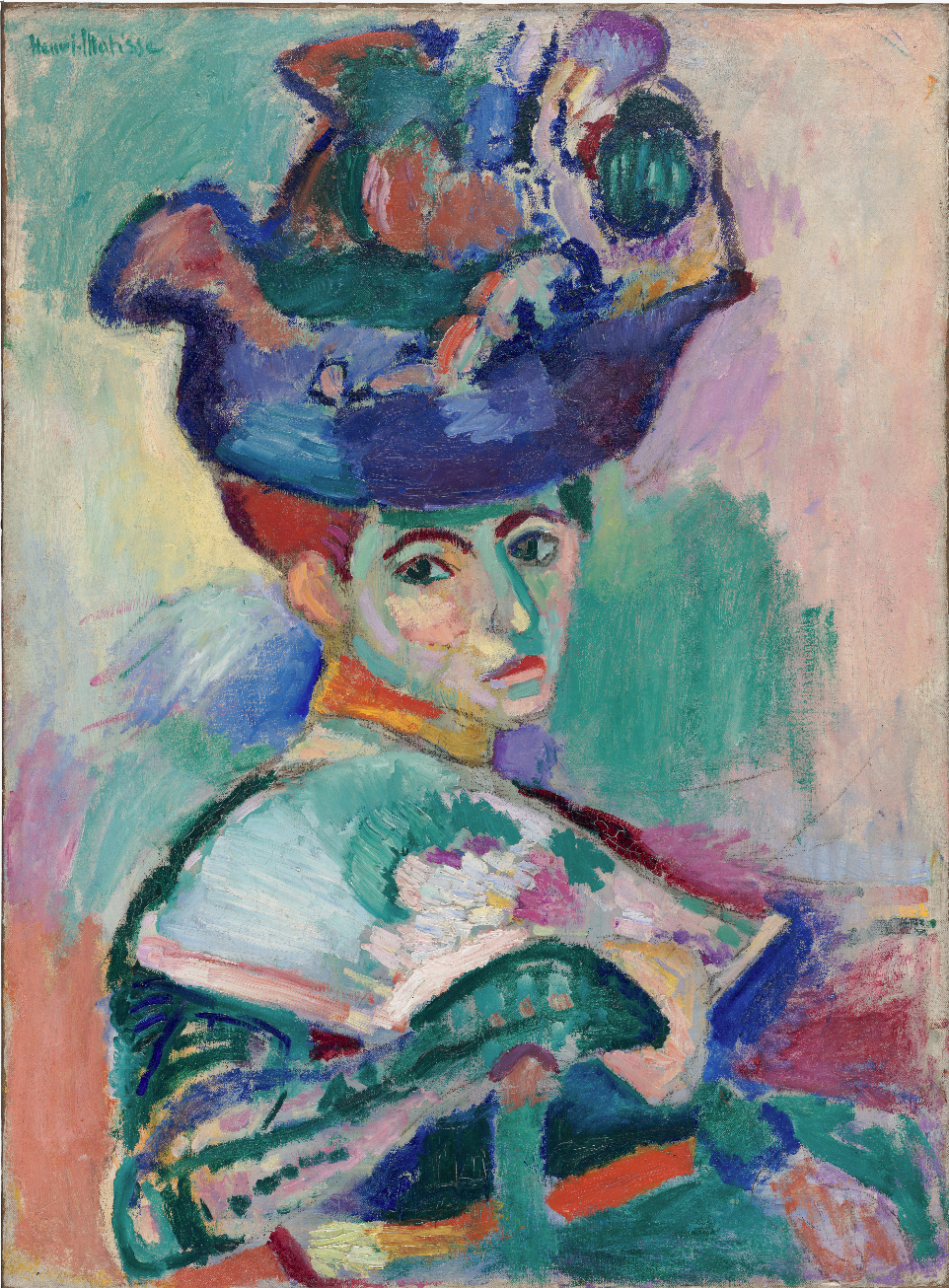

The relevance to art is immediate. The art world also has tempo: periods of consolidation, periods of rupture, cycles of recuperation, the reappearance of older forms, the elevation of new ones. Any aesthetics that ignores tempo will misunderstand why certain works become visible and why others remain latent.
Now to the central art question: why do some people find certain works beautiful while others do not, especially when both parties are educated and sincere?
The first answer is that aesthetic experience is not a passive reception of stimuli. It is an active form of attention, shaped by training. Expertise does not simply add information; it changes perception. It increases sensitivity to relations, to structure, to the consequences of decisions. This is why an artist can be moved by a shift in composition or colour that a casual viewer barely registers. The viewer is not unintelligent; they are simply not yet attuned to the same variables.

The second answer is that people differ in what they ask beauty to do. Some want beauty to stabilise them, to provide coherence, to console, to affirm a world they can inhabit. Others want beauty to destabilise them, to sharpen perception, to expose contradictions, to make the familiar strange. These are not trivial differences, they produce different criteria for what counts as an aesthetic success.
The third answer is tolerance for ambiguity and delay. Much of modern and contemporary art depends on the viewer’s willingness to remain with uncertainty long enough for an internal reorganisation to occur. For some, that delay is precisely where the reward lies. For others, the delay feels like manipulation, exclusion, or emptiness. The disagreement is often less about the object than about the temporal structure of the encounter.
The fourth answer is how context functions. There is a persistent fantasy that “real” beauty should not need explanation, but this fantasy does not always work. Many of the works we regard as unquestionably beautiful are saturated with learned context: liturgical music, classical sculpture, Renaissance painting, even the conventions of what counts as a “good” portrait. Context is not a modern contamination; it is one of the ways aesthetic meaning is transmitted and sustained. What has changed is that contemporary art often makes context explicit, and explicitness can feel like coercion to viewers who have been taught that beauty should arrive unannounced.
Contemporary disputes about beauty are often disputes about the legitimacy of mediation. Some viewers want beauty to be immediate and sensuous, while some want beauty to include intellectual recognition, ethical awareness, historical consciousness. Neither position is wholly sufficient. The most durable works often manage to operate on multiple levels: they hold perceptual interest while also rewarding interpretive depth.


What about “universal” beauty, and maybe when we talk in term of what we see that has no subject? Non-representational work may lack depicted objects, but it still has organised content: relations of colour, line, scale, surface, density, rhythm, interval, and the shaping of attention over time. It has subject matter in the sense that it is about perception and feeling.
When abstraction produces a strong aesthetic response, part of what is happening can be described without reducing the work to a scientific diagram. The perceptual system tends to respond to certain balances of order and complexity. Too much uniformity produces boredom; too much randomness produces anxiety. Many abstract works hold viewers because they find an equilibrium between coherence and surprise. They are legible enough to engage, but not so legible that the encounter is exhausted immediately.

This is also why abstraction divides audiences. Without recognizable imagery, the viewer loses a familiar entry point, and the encounter becomes a test of perceptual patience and sensitivity. Some experience this as liberation, while others experience it as deprivation. That difference often has less to do with intelligence and more to do with what one expects art to supply.
Abstraction demonstrates that beauty does not depend on representation, and therefore beauty cannot be reduced to narrative, morality, or symbolism. But abstraction also demonstrates that beauty is not purely sensory, because the experience depends on learned forms of attention. Abstraction is an unusually clean example of beauty as a felt event that becomes richer through training.

The sublime remains essential in the discussion about and in the experience of beauty because it marks a limit-case where the felt event includes strain, overwhelm, fear, or awe, and yet remains inspiring. The sublime is not simply beauty turned its volume up, it is a different affective structure. Where beauty often involves coherence and attunement, the sublime involves confrontation with magnitude or power that exceeds ordinary grasp and yet produces a kind of exhilaration precisely because the mind is pushed beyond comfortable scale.


Being beautiful is never being pretty, it is about being elegant. Elegance is aesthetic economy under constraint. Paul often says elegance is “when you cannot add or subtract anything”. It is the sense that a complex problem has been solved with minimal residue, that the solution is not only correct but refined. Elegance is experienced as a kind of intellectual beauty, but it is still felt. Mathematicians, lawyers, and artists all recognise elegance when a form achieves inevitability without clumsiness. Elegance is a way beauty appears in the domain of intelligence.

Simplicity is too often conflated with emptiness. But simplicity, in serious work, is typically the result of reduction without loss: the removal of the nonessential so that what remains can operate with greater force. The aesthetic response to simplicity often includes trust: trust that the maker has not used abundance to mask indecision.


All of these terms matter because they clarify the variety of what we call beauty. Not all aesthetic satisfaction is comfort. The language of aesthetics exists to prevent us from using one word to name everything that moves us.
The danger, for professionals, is not that we analyse beauty, but that we analyse it in ways that betray what it is. Beauty is the strange condition in which value becomes present without waiting for permission. It arrives in the body before it can be justified, and yet it does not feel merely private, rather, it feels oriented toward a world shared with others, even when we disagree about the object that triggered it.
The question is not whether beauty is universal or relative. That binary helps the intellect because it offers an easier and softer way to approach something profound and indescribable. The deeper question is what beauty does when it appears. And what it does, again and again, is demand attention and recognition. It makes us available to something, a form, a person, a work, a landscape, a theorem, a building, in such a way that the world briefly stops, and something becomes non-substitutable. Beauty is one of the few experiences that can accomplish this without coercion. It does not always make us good, and it does not always make us wise, but it does make us attentive in a way that ethics and knowledge both depend on.
CURRENT
GROUP EXHIBITION

UPCOMING
The Collaborators
Nettie Wild and Friends, Films and Installations

Opening: Saturday, February 28th, 2026
1:00 - 5:30 PM
Invitation forthcoming

CONTACT US
4-258 East 1st Ave,
Vancouver, BC (Second Floor)
GALLERY HOURS
Tuesday - Saturday,
11:30 AM - 5:30 PM
or by appointment
我们提供中文服务,让我们带您走入艺术的世界。