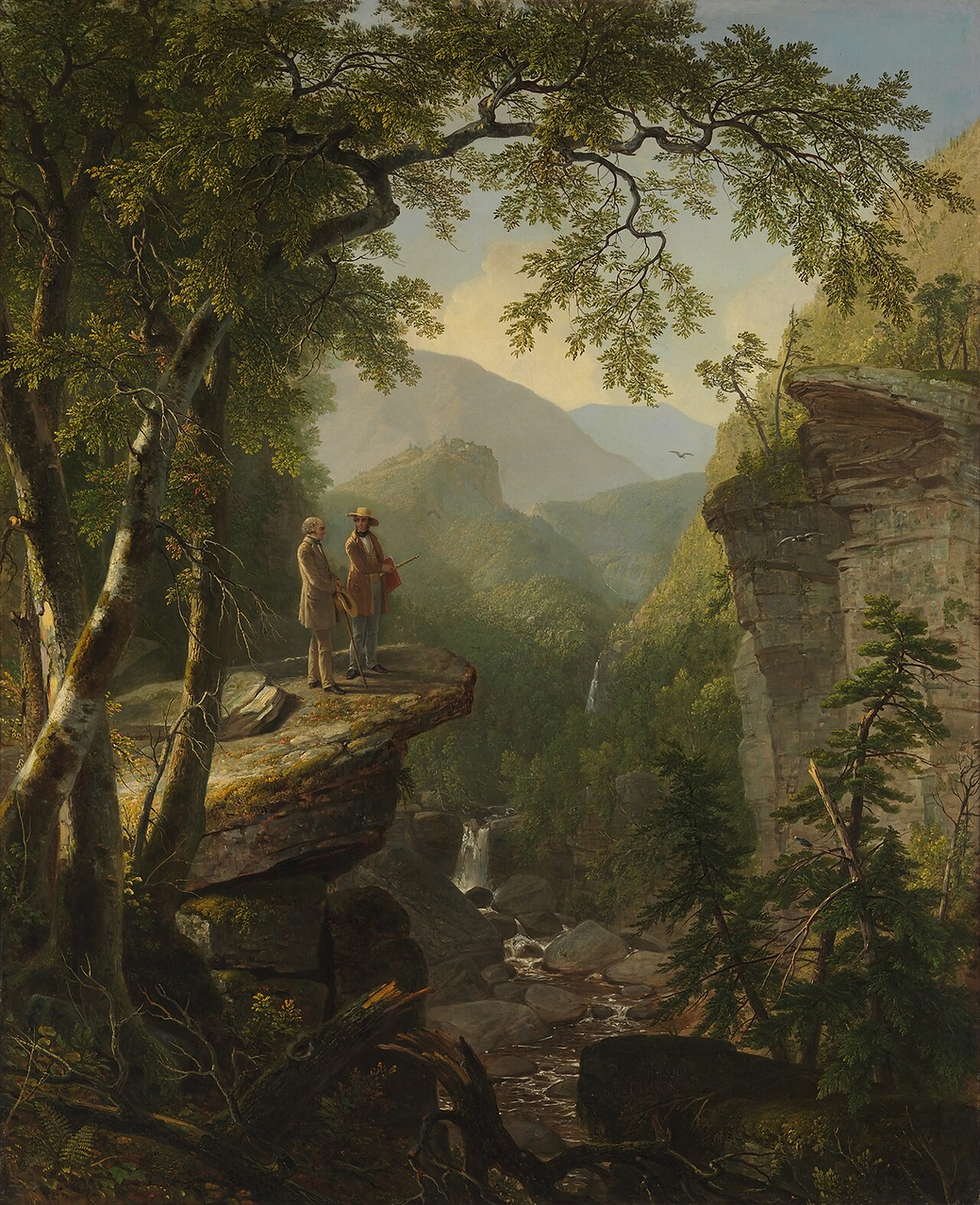
Institutional Reconsideration

welcome to our
SATURDAY EVENING POST
March 28th, 2026
By Diamond Zhou
There are certain institutional decisions that seem, at first, too small in origin to warrant much thought. And yet the more one looks at them, the more they disclose something larger and more unsettling about the culture from which they emerge, not only because of what was done, but because of the speed and certainty with which it was done, as though the institution had been waiting for the opportunity to prove that it could still act decisively, even if decisiveness had long since ceased to be the same thing as judgment. I have been thinking recently about a long-serving educator, someone whose life has been deeply bound to a department, whose labour has shaped not only its outward standing but its inner life, and whose influence still lives, in ways no institutional report could properly record, in the habits, ambitions, and professional lives of the many students who passed through that program under her care. A relatively minor matter arose, the kind of thing that in another climate might have called for a conversation and then receded into the ordinary imperfection of institutional life. Instead, it moved upward and became something larger than itself. By the time it had passed through administration, the scale of the response no longer bore any relation to the scale of the originating difficulty. What remained was an act of removal: the educator placed on leave and subjected to restrictions severe enough to suggest that what had once been a local problem had now been transformed into a moral one.
What is striking in such a case is not that the original concern existed. The problem lies in the conversion of a contained complaint into a moralized administrative crisis, and in the familiar fact that once this conversion begins, proportion becomes very difficult to recover. The issue ceases to be what happened and becomes what the institution fears might be said about what happened, what the delay might be taken to mean, what further complaint might follow, and what reputational or administrative cost may result if the matter is not seen to have been dealt with decisively. That is the moment at which judgment begins to give way to management. And when that happens, removal has a peculiar appeal. It is visible, legible, and it produces the appearance of seriousness. Above all, it closes the situation, at least temporarily, by taking out of circulation the person or object around which tension has begun to form.
What makes this harder to speak about is that these institutional reflexes do not arise in isolation. They belong to a broader moral climate, the idea of “wokeness” though the word has by now been used so carelessly. It began as a heightened attentiveness to forms of exclusion and injustice that had too often been ignored or minimized. But what began as attentiveness has, in many institutions, became something far less admirable. It has become a regime of heightened sensitivity without corresponding depth, in which grievance is too quickly moralized, subjectivity too quickly elevated into authority, and every discomfort begins to present itself as evidence of harm. Confronted by this atmosphere, the institution ceases to ask what is true, what is proportionate, or what would be just. It begins instead to ask what must be said, who must be affirmed, what gesture of correction will satisfy the moment, and how quickly it can be performed. What presents itself as conscience is often something thinner and more anxious: a fear of appearing insufficiently responsive before an audience trained to confuse visible reaction with moral seriousness.
The deeper problem is not simply political correctness, though that too has returned in a more punitive form. It is the steady erosion of distinction. A culture that cannot tell the difference between injury and offense, exclusion and disappointment, disagreement and danger, will eventually lose the capacity for judgment altogether. That is where so much of institutional life now seems to stand, not in the presence of a newly achieved moral clarity, but in a fog of overcorrection, where every claim must be validated, every identity ratified on its own terms, every objection handled as though it carried equal urgency, and every hesitation treated as a possible sign of guilt. Under those conditions, difficult discussion becomes almost impossible, because the conversation has been pre-empted by a demand for acknowledgement and acknowledgement has itself become a form of obedience. The result is not a more humane culture, but a more brittle one, intensely preoccupied with moral display and yet increasingly unable to sustain the ordinary friction, hierarchy, disagreement, and evaluative seriousness upon which any coherent institution depends.
This is why removal has become such an attractive solution. Once the institution no longer trusts itself to rank claims, to defend standards, or to endure the discomfort of saying no, subtraction begins to look like the highest form of care. A work is removed, a person is suspended, a statement is retracted, a difficulty is absorbed into the theatre of correction, and the institution congratulates itself for having acted. But this is not moral courage. It is administrative self-protection draped in ethical language. And the more often this happens, the more a society loses not only its confidence in judgment, but the habits of mind by which judgment is formed: patience, discrimination, proportion, seriousness, and the willingness to withstand disapproval without immediately converting it into policy.
It is at precisely this point that the history of removed artworks becomes impossible to ignore, it offers a record of what institutions do when they no longer wish to live with ambiguity. The removal of a work is never just about the work, it is about authority, about who has the right to define offense, inconvenience, danger, impropriety, distortion, political risk, or moral cost. It is about what an institution will defend, and what it will not defend to make a harder argument on its own behalf. The stories are rarely simple, they involve different motivations, different publics, different kinds of pressure, and sometimes very different ethical stakes. But in each case, something is judged not merely difficult, but too difficult to remain in place.

One of the most revealing early examples is the 1931 removal of Bertram Brooker’s Figures in a Landscape from an exhibition at the Art Gallery of Toronto, now the Art Gallery of Ontario. The painting was not some salacious provocation designed to scandalize the city. It showed two female nudes, their bodies dominating the foreground so that the landscape itself was partially blocked by their forms. Before the exhibition even opened, the city’s board of education intervened and had the work removed on the grounds that it was inappropriate for schoolchildren visiting the gallery. Someone in authority decided, on behalf of a vulnerable audience imagined in advance, that the work should not be permitted to remain visible within an institutional setting. Brooker, indignant, responded in print with an essay titled “Nudes and Prudes,” defending not only the artistic merit of the painting but the larger proposition that nudity in art does not corrupt simply by being seen. This now looks almost embarrassingly small-minded, but that is precisely what makes it useful. It shows how often institutions act under the sign of protection, especially where youth is invoked, and how quickly that protective instinct can become a refusal to trust art, context, or viewers. The painting itself becomes secondary, what matters at the time is the institution’s desire to avoid the possibility of scandal before scandal has even taken shape.
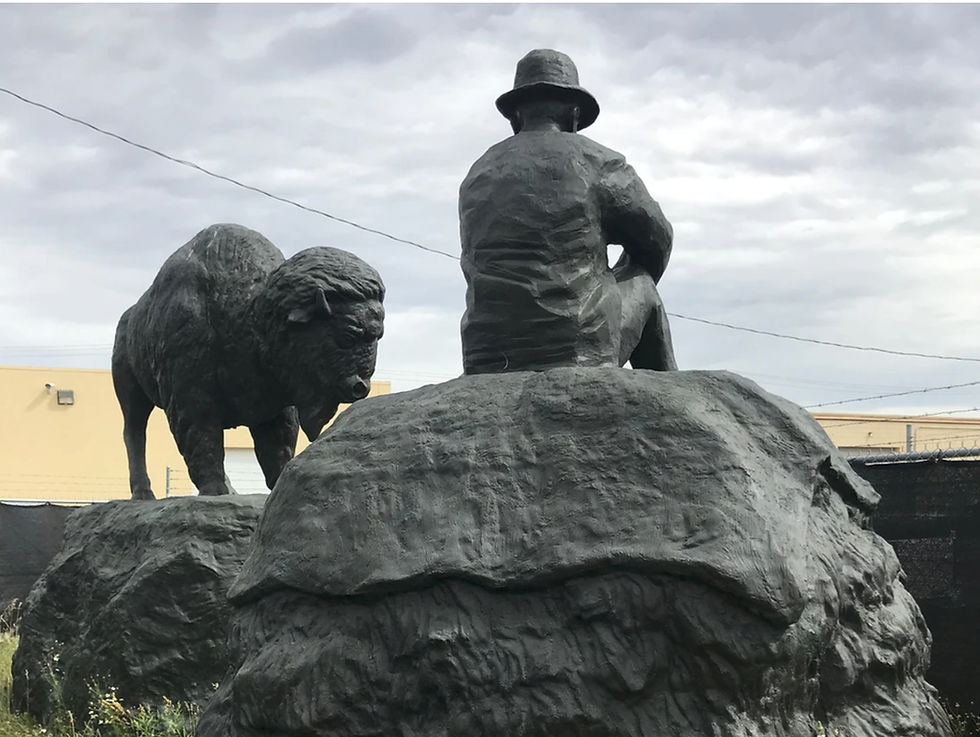
That same anticipatory instinct, though operating in a very different cultural climate, reappeared with remarkable force in the case of Ken Lum’s The Buffalo and the Buffalo Fur Trader, a 2016 public commission for Edmonton that was completed and then never installed. The work was conceived as a two-part bronze sculpture for a bridge: a colonial fur trader placed at one end, a bison at the other, both looking out over the water. Lum’s stated intention was not celebratory but tension-filled. The paired figures were meant to stage, in his words, the “palpable tension and problematic history” between settler colonial commerce and the near-destruction of the animal that underwrote so much of that history. The remarkable detail, and the one that should trouble anyone interested in institutions, is that according to the Art Canada Institute, the city received no formal complaint about the work before deciding not to place it. The sculpture had already been made, sitting in storage. Officials acted pre-emptively, worried that the work might be misunderstood, that it might be read as affirming rather than critiquing colonialism. This shows an institution suppresses a work because of a projected interpretation, because it distrusts the public’s ability to read complexity, or perhaps distrusts its own ability to defend that complexity once challenged. There is something almost tragic in that. A public artwork made to address a damaged history is itself withheld from public life because the institution fears that history is too charged to be staged without risk. And so the risk is managed not through interpretation, education, signage, or courageous framing, but through absence.


Richard Serra’s Tilted Arc remains one of the clearest cases of what happens when an institution loses interest in defending a work that asks something difficult of the public. Installed in 1981 in Federal Plaza in Lower Manhattan, Tilted Arc was a curving slab of raw Cor-Ten steel, twelve feet high and 120 feet long, cutting physically across the plaza. It did not invite passive admiration, one had to walk around it, measure one’s body against it, feel one’s movement redirected by it. Serra’s own account of the work was explicit: the point was to alter how the plaza was experienced, to make viewers aware of their own movement and of the spatial logic of the site itself. This was public sculpture as intervention. It was commissioned through the U.S. General Services Administration’s Art-in-Architecture program, which dedicated a portion of federal building budgets to permanent public art. From the start, however, the work attracted hostility, office workers in surrounding buildings complained that it split the plaza, blocked passage, ruined the space, invited graffiti, and even posed security risks. Employees from two government divisions gathered 1,300 signatures calling for its removal. Serra testified that the sculpture was site-specific and that removing it would destroy it, and site-specificity was the work’s condition of existence. A sculpture designed for that plaza, in relation to those buildings, those sightlines, that pedestrian flow, cannot simply be shifted elsewhere as though it were a decorative object. The hearing itself revealed the split. According to PBS, 122 people testified in favour of keeping it and 58 in favour of removing it; yet the five-member panel voted 4–1 for removal. In March 1989, federal workers cut the work into pieces and carted it away. What I find revealing in this case is not only the removal itself, but the nature of the objections. Tilted Arc was not removed because it incited violence, spread hatred, or violated a law. It was removed because it disrupted habit, because it changed the use-value of a public space, because its very refusal to be accommodating was experienced as an offense. The institution, faced with prolonged irritation and political pressure, restored ease. And in restoring ease, it eliminated one of the most important public sculptures of the period.
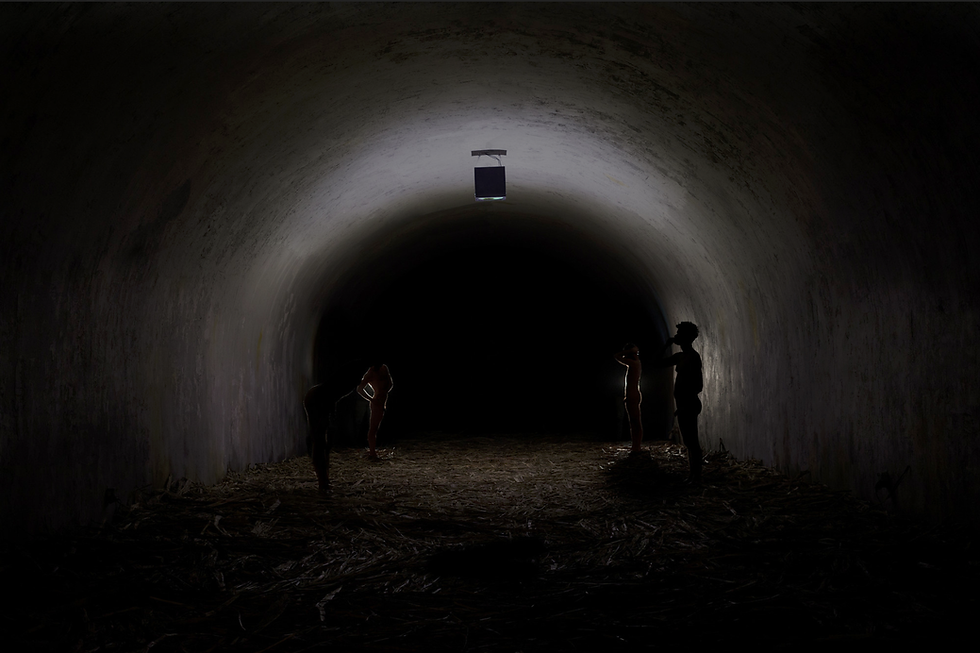

Tania Bruguera’s Untitled (Havana, 2000) made it impossible to avoid the question of what a state will permit a body to signify in public. The work was first installed in the Cabaña Fortress during the 7th Havana Biennial, a site that had served not only as a colonial military structure but, during the Cuban Revolution, as a prison for dissidents and a place marked by execution, confinement, and political terror. Bruguera’s installation occupied one of the fortress vaults and was built from milled or decomposed sugarcane bagasse spread across the floor, creating unstable footing under near-total darkness. At the far end, visitors encountered video footage of Fidel Castro, while live nude performers, barely visible, inhabited the space in ways that made the body appear at once exposed, disciplined, and spectral. MoMA’s description of the work emphasizes the conjunction of sugarcane, darkness, live performance, and Castro’s image; Bruguera’s own account stresses the location’s history as a jail for prisoners of conscience; and when the work was restaged in New York years later, the museum noted that it had been on view in Havana for mere hours before the Cuban government shut it down. Another report on the work’s afterlife states that authorities justified the closure on the grounds that public male nudity was prohibited, which is itself revealing, because such an explanation translates a politically charged work about surveillance, bodily submission, revolutionary mythology, and historical violence into a problem of decency. The official reason, in other words, miniaturized the actual stakes. It treated the work as if it were offensive in the simplest possible way, when what was obviously intolerable was the conjunction of state image, vulnerable flesh, and historical memory in a site already saturated with political meaning. The closure did not neutralize the work; it made the structure of prohibition part of the work’s history forever after.
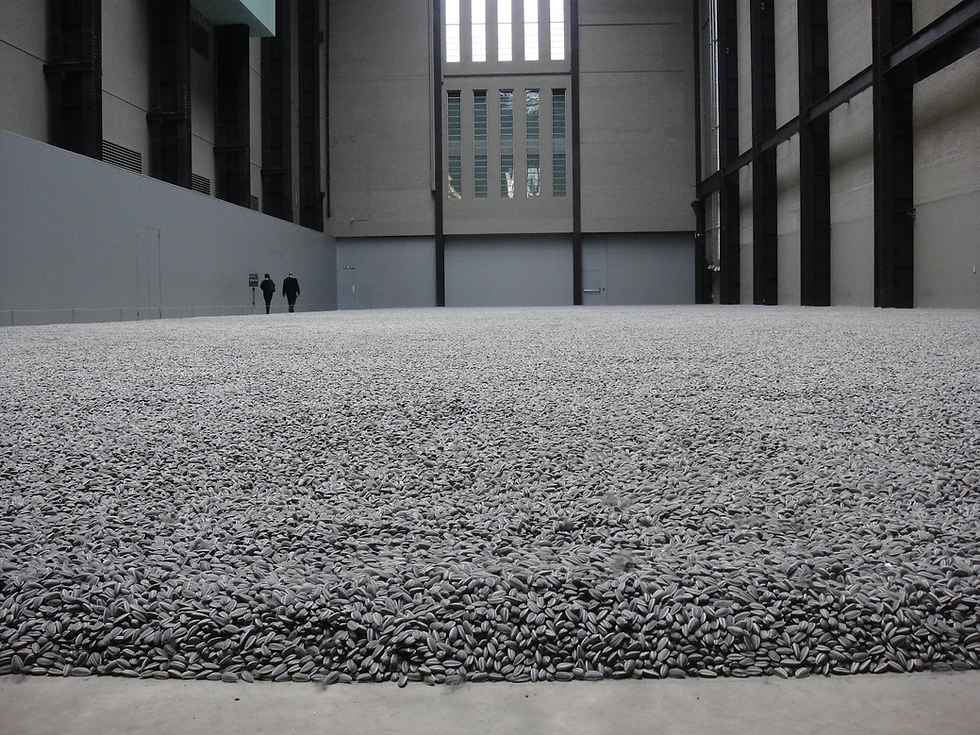

Ai Weiwei’s exclusion from the 2014 exhibition marking the fifteenth anniversary of the Chinese Contemporary Art Award at the Power Station of Art in Shanghai reveals a different, quieter, and in some ways even colder mode of institutional erasure. The artist was not marginal to that history; Ai had served repeatedly as a jury member for the award and had received its Lifetime Achievement Award in 2008. The Shanghai anniversary exhibition was to include two works by him, Sunflower Seeds and Stools. The first, Sunflower Seeds (2010), is among his most widely recognized installations: more than one hundred million individually hand-painted porcelain sunflower seeds made by roughly 1,600 artisans in Jingdezhen, a work that appears, at first glance, as a mass of uniformity but on closer inspection reveals intense labour, singularity, and a critique of both collectivism and industrial production. Stools draws on Qing-dynasty and vernacular wooden stools, multiplying and re-situating them so that ordinary furniture becomes a field of repetition, history, and social memory. Neither work was especially incendiary within the context of the exhibition, however, shortly before the exhibition opened, the Shanghai Municipal Bureau of Culture barred organizers from showing or even mentioning Ai Weiwei, his works were removed from the gallery, his name was taken off the wall where it had appeared as the 2008 lifetime honouree. Uli Sigg, who had long supported the award, referred obliquely in his opening speech to the absence of one artist, but the remarks were reportedly left untranslated. What emerged was a near-perfect example of administrative disappearance. No dramatic confrontation, no shouted denunciation, no trial of public opinion. A globally known artist was simply made to vanish from the official frame, and the institution complied because the terms of its existence required compliance.

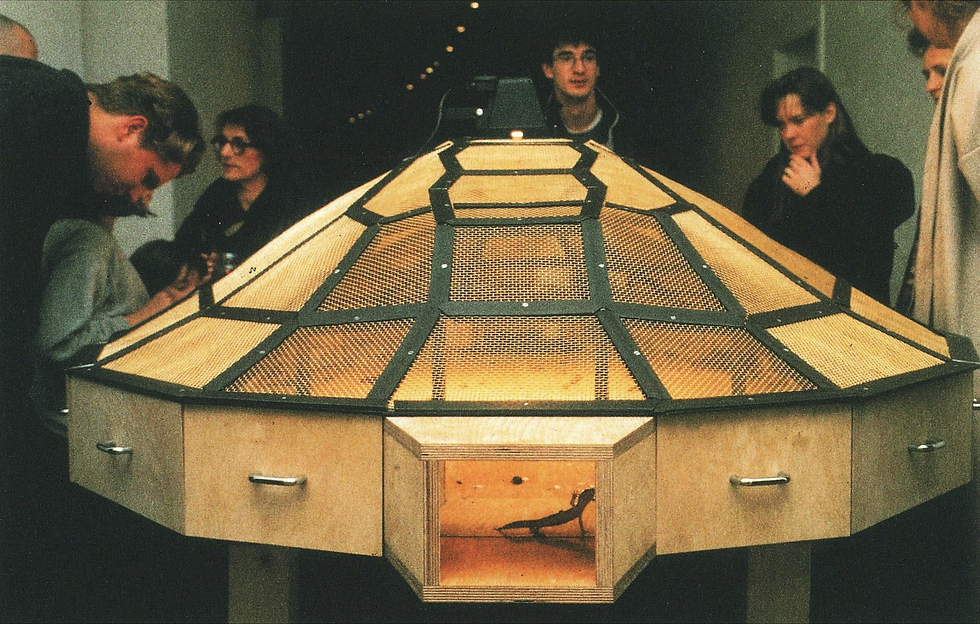
The controversy surrounding the Guggenheim’s 2017 exhibition Art and China after 1989: Theater of the World is more difficult, because it does not lend itself to a simple opposition between cowardly institution and righteous artwork, or between censorship and freedom in any uncomplicated way. The exhibition was conceived as a major survey of experimental Chinese art after 1989, and among the planned works were three pieces involving animals. Huang Yong Ping’s Theater of the World (1993), from which the exhibition itself took its title, was a large domed enclosure containing insects, reptiles, and other live creatures in a closed environment where they would prey on one another. Xu Bing’s A Case Study of Transference (1994) was represented through documentation of a performance in which two pigs, covered with pseudo-text and real script resembling English and Chinese markings, were filmed mating before a gallery audience. Sun Yuan and Peng Yu’s Dogs That Cannot Touch Each Other (2003) was a video showing pit bulls tethered to treadmills and straining toward each other without contact. Before the exhibition opened, these works became the focus of a massive online petition and widespread accusations of animal cruelty. The Smithsonian’s summary described the controversy as a swirl of questions around artistic freedom and cruelty; the Guggenheim stated that it had decided against showing the works; other coverage noted that the museum cited explicit and repeated threats of violence and concern for the safety of staff, visitors, and artists. One can understand why the museum acted. One can also see, very clearly, what was lost. The works were removed before audiences could encounter them within the curatorial argument of the exhibition, which concerned the ethical instability of systems, the spectacularization of violence, and the conditions under which living bodies are organized, displayed, and instrumentalized. Instead of risking that encounter, the institution accepted a narrower frame in which the only viable question was whether the works were acceptable at all.

The 2019 Aichi Triennale in Japan makes the logic of removal still more explicit because the exhibition that was shut down was itself devoted to works with histories of censorship. The section was called After “Freedom of Expression?”and, as the artists’ own statement later put it, it gathered artworks that had already experienced different forms of suppression in public institutions across Japan. Among the works that drew the fiercest hostility were Statue of Peace by Kim Seo-kyung and Kim Eun-sung, a sculpture of a seated girl identified with the history of Korean “comfort women” forced into sexual slavery by the Japanese military, and Nobuyuki Oura’s Holding Perspective: Part 2, a twenty-minute film that included an image of a photograph of Emperor Hirohito being burned. The combination was combustible not because the exhibition was obscure, but because it condensed unresolved historical trauma, nationalist grievance, and a challenge to the sanctity of imperial memory into a publicly funded art event. Tokyo Review records that a barrage of angry calls and threats by online nationalists followed almost immediately after opening; the artists’ statement specifies hundreds of intimidating phone calls and a fax threatening an attack using gasoline and fire, an especially chilling detail in the aftermath of the Kyoto Animation arson that had killed thirty-five people only weeks earlier. The exhibition was closed just three days after opening. The mayor of Nagoya publicly demanded removal of the “comfort woman” statue, claiming it trampled on the feelings of Japanese citizens. Organizers defended the closure at first as risk management, but artists described it as censorship. AP later reported that when the exhibition reopened under tightened security, bags were banned and visitors faced intensified screening before entering to see the seated girl with the small yellow bird perched on her shoulder. What matters here is not merely that the works were controversial, it is that an exhibition explicitly designed to test whether previously censored works could be publicly re-encountered was itself closed almost immediately under a combination of political pressure and threats. It became, in real time, another entry in the very history it meant to examine.

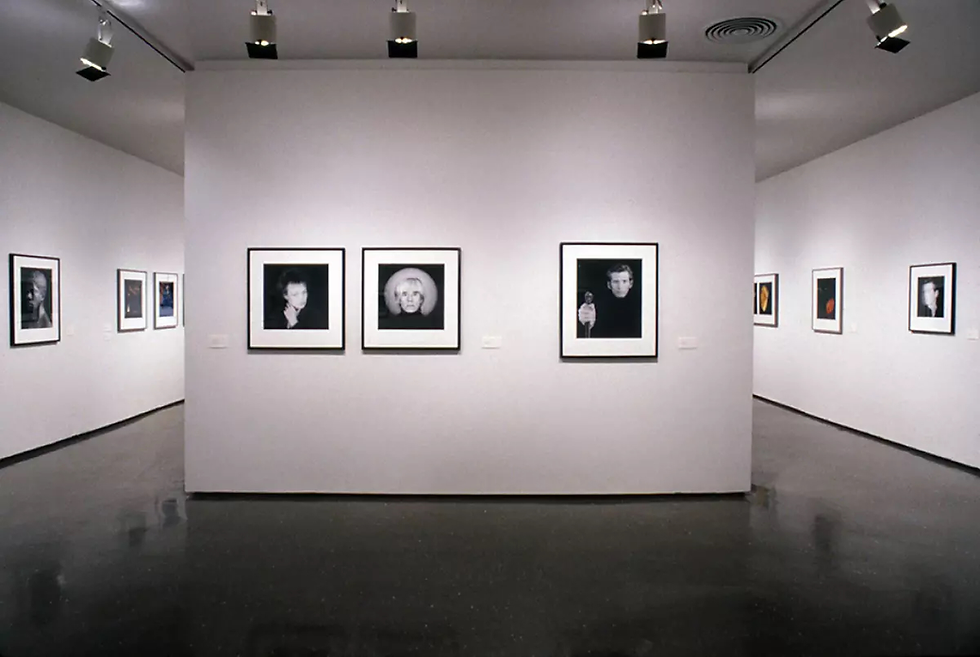
Robert Mapplethorpe’s The Perfect Moment remains one of the clearest cases that shows how quickly a traveling retrospective could be transformed into a criminal test of what a museum is permitted to display. The exhibition, first mounted at the Institute of Contemporary Art in Philadelphia in 1988 and later shown in other venues, brought together 175 photographs by Mapplethorpe, who had died of AIDS-related complications in 1989, and whose black-and-white images ranged across celebrity portraiture, floral still lifes, classical nudes, self-portraits, images of Black male bodies, and photographs from the X Portfolio depicting explicit gay sadomasochistic sex. By the time the exhibition reached the Contemporary Arts Center in Cincinnati in 1990, the show was entering a political environment already primed by the culture wars, federal anxiety around arts funding, and the opportunistic conflation of homosexuality, obscenity, and public subsidy. Smithsonian Magazine notes that the trial that followed was the first time a museum faced criminal charges related to artworks on display. On the day the exhibition opened in Cincinnati, a grand jury indicted both the institution and its director, Dennis Barrie. The prosecution focused on seven photographs it deemed obscene, including five sexually explicit images of men from the X Portfolio and two photographs of nude children. The trial ended in acquittal in October 1990, and the prosecution failed to persuade the jury that the photographs lacked artistic value. But the acquittal does not erase what happened, an institution was dragged into court because it had permitted sexually explicit and queer imagery to remain visible in a museum. The point was not simply to punish Mapplethorpe, who was already dead, it was to warn institutions that if they did not regulate themselves, the law might do it for them.
Painted in 1866, Gustave Courbet’s The Origin of the World is among the most famous and most explicit images in Western art, a close, unsentimental depiction of a woman’s torso and genitalia without face, hands, or feet, reducing the body neither to pornography nor to allegory, but presenting sexuality with a directness that still unsettles many viewers. In 2011, the French teacher Frédéric Durand-Baïssas posted an image of the painting on Facebook and found his account suspended within hours. When he sued, he argued that the company had violated his freedom of expression by treating a canonical artwork as impermissible sexual content. AP reported in 2018 that the case revolved around precisely this issue: a nineteenth-century painting depicting female genitalia was enough to trigger platform enforcement, even though Facebook’s later standards expressly allowed paintings and sculptures that depict nude figures. What is so revealing here is the absurd compression of categories. The platform’s moderation system, whether automated, user-reported, or both, did not distinguish between a museum painting and prohibited pornography. Or perhaps more accurately, it did not care to. The problem was not interpretation, historical context, or artistic pedigree, the problem was visibility at scale. Once an image travels in the flattened conditions of social media, what matters is not what it is, but whether it trips the platform’s thresholds for risk. The result is a new kind of censorship, in more pervasive ways, because it is embedded in everyday circulation and enforced by systems that are designed to err on the side of removal rather than context.

The 2020 removal of Xandra Ibarra’s Spictacle II: La Tortillera from XicanX: New Visions in San Antonio is important for almost the opposite reason. Here the work was neither a canonical old master nor a historic queer martyr’s film suddenly revived in a museum, but a contemporary video by a living queer Latina performance artist whose work had already been shown nationally and internationally. The piece, created in 2014 from a 2004 live performance, features Ibarra in the persona of La Chica Boom, a deliberately exaggerated “minstrel Mexican housewife” through whom she satirizes race, gender, nationalism, and sexual stereotype in what the National Coalition Against Censorship called a humorous retro border corrida. The exhibition’s curators had already agreed to curtain the work off and add advisory signage at the city’s request. On the day the show opened at Centro de Artes, a city-owned and publicly funded gallery, San Antonio officials ordered the work removed after the city attorney concluded it violated Texas obscenity law. NCAC responded that the work plainly possessed serious artistic value and therefore did not meet the legal standard for obscenity under Miller v. California. A city subcommittee later agreed and recommended that the video be reinstated, yet the final decision was left to the arts director, who kept it out, reportedly maintaining that art shown in the city’s public spaces had to be suitable for children. The decisive standard remained a vague and elastic appeal to public propriety and child-suitability. Once again, the institution preferred absence to the burden of defending a difficult work in public view.

What these stories finally make visible is not simply that controversy follows art, or that institutions sometimes make weak decisions under pressure, but that removal has become one of the preferred languages through which authority now speaks when it no longer trusts itself to discriminate carefully between kinds of difficulty. This is why the case with which I began today’s writing with still strikes me as so revealing, and so much sadder than its practical origin would suggest.
That, perhaps, is the most disturbing continuity between these cases. The object removed is never only the object removed. It becomes the means by which an institution restores its own appearance of coherence. A painting disappears so that propriety may be seen to prevail. A sculpture is never installed so that reputational ambiguity never has to be publicly confronted. A public work is dismantled so that a plaza may feel manageable again. A video is pulled so that a museum can continue without defending what it fears will contaminate the rest of the exhibition. A person is placed on leave so that the institution may appear to have acted decisively in response to a complaint whose original scale may have been quite modest. In each instance, the removal is both literal and exemplary. It does something practical, but it also sends a message about what kind of burden the institution is and is not prepared to carry. And more often than not, the burden it refuses is not genuine danger, but unresolved complexity.
It is tempting to say that this is simply what bureaucracies do, and in one sense that is true. Bureaucracies are designed to stabilize, to regularize, to convert messy situations into manageable outcomes. But that explanation is not enough, because cultural institutions, universities, museums, galleries, and public agencies do not merely administer things. They also claim to interpret them, to preserve the conditions under which difficult material can be encountered, argued over, contextualized, and thought through without being immediately extinguished. That is part of their moral task, not just their professional function. And when they cease to trust themselves in that task, the consequences spread far beyond any single controversy. The public learns that offense is easier to manage through pressure than through argument. Administrators learn that pre-emptive caution is often rewarded more reliably than proportionate judgment. Artists learn that context may not save a work once it becomes politically expensive. Teachers learn that years of contribution may count for very little once a complaint enters a system that no longer distinguishes carefully among degrees of failure. Students, for their part, learn something as well, and not always something good: that to be heard is increasingly tied to the visibility of institutional response, and that response is most legible when it takes the form of removal.
UPCOMING EXHIBITION
DANIELL MULLEN
ECHOES
Opening: Saturday, April 18th



CONTACT US
4-258 East 1st Ave,
Vancouver, BC (Second Floor)
GALLERY HOURS
Tuesday - Saturday,
11:30 AM - 5:30 PM
or by appointment
我们提供中文服务,让我们带您走入艺术的世界。