Inspirational Quotes from Writers, Philosophers, and Critics

welcome to our
SATURDAY EVENING POST
April 11th, 2026
By Diamond Zhou
“The greatest thing a human soul ever does in this world is to see something,
and tell what it saw in a plain way.”
— John Ruskin
Ruskin was not only an English art critic but one of the great Victorian moral voices, writing on art, architecture, labour, religion, and social life. He was a gifted prose stylist, a champion of Turner, and a formative force for the Pre-Raphaelites. This line treats seeing not as passive reception but as a serious human achievement. In the nineteenth century, amid industrial acceleration, restoration mania, and the mechanization of everyday life, Ruskin made looking feel like a moral discipline. He remains relevant to this date because he insisted that visual judgment begins in patient attention, and because so much later art writing, whether it knows it or not, still lives inside that demand.

“All art is quite useless.”
— Oscar Wilde
Wilde was the brilliant Irish writer of the fin de siècle, the author of The Picture of Dorian Gray and The Importance of Being Earnest, and the most theatrical public face of Aestheticism in the English-speaking world. He belonged to a late nineteenth-century world obsessed with moral instruction, seriousness, usefulness, respectability, and the civilizing mission of culture, which is part of why the sentence lands with such elegance and insolence. It appears in the preface to Dorian Gray, where Wilde turns the Victorian demand that art justify itself into something to be laughed out of the room. “Useless” here is not contemptuous, it is aristocratic in the older sense. Art is not a servant, it does not exist to improve public hygiene, repair morals, or submit to the courtroom of utility. The sentence condenses an entire cultural rebellion, one in which style, beauty, wit, and artifice became ways of refusing the heavy hand of moral earnestness. That refusal was not socially neutral. In Wilde’s case it belonged to a larger performance of selfhood that made him both magnetic and intolerable to his age. Even now the line has not lost its sting, because every era tries again to force art into service, and Wilde keeps slipping the leash.

“Art is a means of union among men, joining them together in the same feelings.”
— Leo Tolstoy
Tolstoy is remembered first as the author of War and Peace and Anna Karenina, but his later writings on religion, ethics, and culture were equally influential and often severe. In What Is Art? he turned against elite aestheticism and argued that art should be judged by its power to transmit feeling sincerely and communally. That argument belongs to a late nineteenth-century moment when industrial modernity, class division, and spiritual crisis made many thinkers ask what culture was for. Tolstoy’s answer is demanding: art is not ornament for the refined few but a human means of connection. Even those who reject his moral rigor still have to reckon with the force of the question he poses. Does art bind us to other lives, or does it flatter the vanity of taste? That question has never gone away.

“In order to understand the esthetic in its ultimate and approved forms,
one must begin with it in the raw.”
— John Dewey
Dewey, the American philosopher and educator associated with pragmatism and progressive education, changed the terms of modern aesthetics by reconnecting art to lived experience. In Art as Experience he opposed the museum habit of isolating art from ordinary life as if beauty belonged only to special objects in quiet rooms. That intervention mattered in the early twentieth century because modern life was becoming more urban, mechanized, and institutionally segmented. Dewey insisted that the aesthetic begins earlier and deeper, in rhythms of attention, labour, sensation, interruption, and fulfilment. The line dismantles cultural snobbery without flattening art into everydayness. It reminds us that high art is not another species, it is an intensified form of capacities already present in human experience. That remains one of the most democratic things anyone has said about art.

“That which withers in the age of mechanical reproduction
is the aura of the work of art.”
— Walter Benjamin
Benjamin, the German Jewish critic and philosopher writing in the interwar period, stood at the threshold of a transformed image-world: photography, cinema, mass circulation, fascist spectacle, urban shock, political propaganda. Few writers felt so sharply that modernity had altered not only what people saw but how they saw. In “The Work of Art in the Age of Mechanical Reproduction,” written in the 1930s as Europe darkened, aura names the singular presence of a work in time and space, its distance, its authority, its once-ness. Reproduction does not merely make copies, it changes the conditions of encounter. The artwork is detached from ritual, loosened from place, brought into circulation, made available to masses who do not meet it under the old terms of reverence and uniqueness. The essay is charged by both loss and possibility, the decline of aura is also bound up with new political futures, new publics, new forms of perception. An entire philosophy of modern visual culture is folded into the word “withers,” which suggests not a theatrical collapse but a gradual historical drying out, as though the old sacred atmosphere around the work had begun to evaporate under technological light.

“Seeing comes before words.”
— John Berger
Berger was a British novelist, essayist, critic, broadcaster, and sometime painter, best known in art history for Ways of Seeing, which began as a BBC television series and became one of the most influential books on images in the modern era. What made Berger important was not only his intelligence but his reach: he brought questions of class, ideology, gender, reproduction, and spectatorship into a public conversation from which art history had often excluded ordinary viewers. This line gives primacy to perception without pretending perception is innocent. We see before we theorize, but what we see is constantly shaped by power, habit, and context. In the 1970s, when image culture and advertising were intensifying, Berger helped readers understand that looking is never neutral. He made criticism feel like a form of civic literacy.

“In place of a hermeneutics we need an erotics of art.”
— Susan Sontag
Susan Sontag was one of the great American intellectuals of the twentieth century, writing across literature, photography, illness, politics, film, and culture with rare elegance and severity. In “Against Interpretation,” published in the 1960s, she pushed back against critical habits that turned artworks into puzzles whose hidden content had to be extracted and decoded. Within the context of mid-century, criticism was saturated with systems, methods, and interpretive suspicion. Sontag did not argue against thought, but against the deadening urge to explain art until nothing of its sensual and formal life remained. The word “erotics” is used, because she wanted a criticism capable of contact, pleasure, intensity, and sharpened response. These words still reminds us that analysis is not the same thing as encounter, and that over-reading can become a sophisticated way of not seeing.

“What the Photograph reproduces to infinity has occurred only once.”
— Roland Barthes
Barthes, the French critic and theorist associated with structuralism, semiotics, and later more intimate forms of writing, remains central to the history of photography because he grasped the medium’s uncanny relation to time. In Camera Lucida he was not writing a technical theory of photography so much as a meditation on grief, presence, memory, and the puncture of the real. The late twentieth-century theory had become deeply concerned with signs, codes, and representation; Barthes, without abandoning that world, returned photography to mortality. The photograph can be copied endlessly, yet what it records happened once and cannot be repeated existentially. That paradox is why photographs feel at once mechanical and elegiac. Barthes gave language to the medium’s strange authority: it does not merely resemble what was, it bears witness that it has been.

“Art, then, is, if I am right, the chief organ of the imaginative life.”
— Roger Fry
Fry was an English critic, painter, and one of the crucial early interpreters of modern French painting in Britain. He helped introduce Post-Impressionism to English audiences and argued that the formal qualities of art, line, rhythm, design, relation, mattered more than anecdotal subject matter. At the turn of the twentieth century, that was a serious cultural intervention. It asked viewers to stop reading paintings like illustrated stories and start responding to their internal organization. Fry does not reduce art to decoration or connoisseurship, he gives it a central role in human inwardness. Art becomes the means by which imagination is trained, clarified, and enlarged. Even where later criticism has revised or challenged Fry’s formalism, his belief that art shapes the imaginative life remains one of the most durable and dignified claims in modern criticism.

“There really is no such thing as Art. There are only artists.”
— E. H. Gombrich
Gombrich, the Austrian-born art historian whose The Story of Art introduced generations of readers to the field, was one of the great popularisers of art history without ever becoming simplistic. His opening line sounds disarming, but it is intellectually strategic. He is warning against treating “Art” as an abstract idol hovering above time, place, labour, and makers. The sentence mattered enormously after the catastrophes and ideological abstractions of the twentieth century, because Gombrich preferred concrete historical intelligence to grandiose mystification. He brings us back to people making choices under conditions, solving problems, inheriting traditions, inventing departures. This line is still important even in contemporary art discourse, because it reduces the intimidation factor without reducing seriousness. It tells the reader that art history begins not with worship but with attention to human beings at work.

“Content is to be dissolved so completely into form that the work of art or literature cannot be reduced in whole or in part to anything not itself.”
— Clement Greenberg
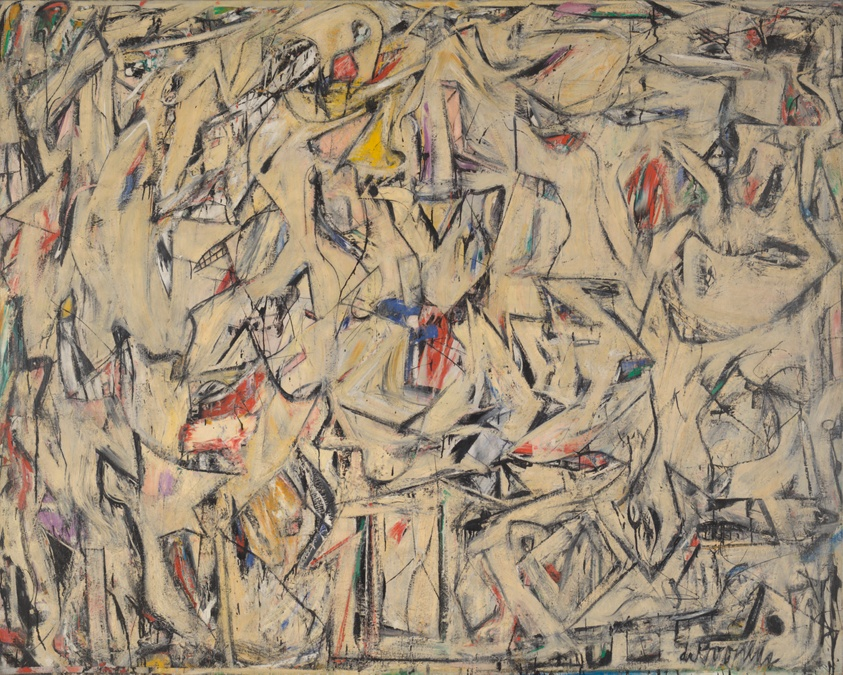
Greenberg was the most powerful American formalist critic of the mid-twentieth century, an early champion of Abstract Expressionism and one of the major theorists of modernist autonomy. In the 1930s and after, amid mass culture, propaganda, kitsch, and ideological pressure, Greenberg argued that serious art preserved itself by turning inward: “I think a poor life is lived by anyone who doesn’t regularly take time out to stand and gaze, or sit and listen, or touch, or smell, or brood, without any further end in mind, simply for the satisfaction gotten from that which is gazed at, listened to, touched, smelled, or brooded upon.” He advocated for the lack of usefulness in art and that nothing needs to prove itself by function or moral sermon. One can linger simply for the satisfaction of encounter. Art can become more self-critical, more medium-specific, more irreducible. It is easy now to object, and many have, but one ignores Greenberg at the cost of understanding modernism poorly. He sharpened the question of what painting could be when it stopped apologizing for being painting, and that severity shaped the course of twentieth-century art far beyond those who agreed with him.

“What was to go on the canvas was not a picture but an event.”
— Harold Rosenberg
Rosenberg, another major American critic of the postwar era, offered a very different account of modern painting from Greenberg’s. Where Greenberg emphasized formal necessity, Rosenberg dramatized the act of making. He is the critic most associated with the term “Action painting,” and with the sense that Abstract Expressionism turned the canvas into an arena of decision, risk, self-invention, and existential exposure. Historically, this mattered in the aftermath of war, when the language of authenticity, freedom, and individual action had unusual force. The painting was no longer only an object to be composed; it was the record of a confrontation. The line captures a real shift in artistic consciousness, it also reminds us that criticism can change history not only by describing artworks, but by giving an era a language dramatic enough to recognize itself.
“But like so many other so-called questions involved in the
feminist ‘controversy,’ it falsifies the nature of the issue.”
— Linda Nochlin
Nochlin was the American art historian whose 1971 essay “Why Have There Been No Great Women Artists?” changed the discipline. Her importance lies not merely in recovering overlooked women artists, though that mattered enormously, but in exposing the institutions, exclusions, and myths that made such absence seem natural in the first place. The historical context is crucial: second-wave feminism was reshaping universities, museums, and publishing, and Nochlin brought that pressure directly into art history. This sentence teaches methodological suspicion. She shows that some questions are traps, framed so that their apparent neutrality already contains the answer. In other words, criticism must examine the grammar of the problem, not merely supply names to a pre-distorted narrative. That remains one of the most powerful lessons feminist art histories gave the field.

“To see something as art requires something the eye cannot descry: an atmosphere of artistic theory, a knowledge of the history of art: an artworld.”
— Arthur C. Danto
Danto was an American philosopher and critic, long associated with Columbia University and later with The Nation, and one of the essential thinkers for understanding postwar contemporary art. The line comes from his effort to explain why Warhol’s Brillo Boxes could be art while visually similar supermarket cartons were not. That problem emerged historically in the 1960s, when Pop, Minimalism, and conceptual shifts made resemblance and craft unreliable markers of arthood. Danto’s great contribution was to show that the artwork is never only what meets the eye. It is also embedded in theory, discourse, institutions, and historical possibility. The sentence still matters today because it explains why contemporary art can look ordinary and yet be conceptually seismic. It also explains why art history is not optional decoration around the object, but part of its very intelligibility.

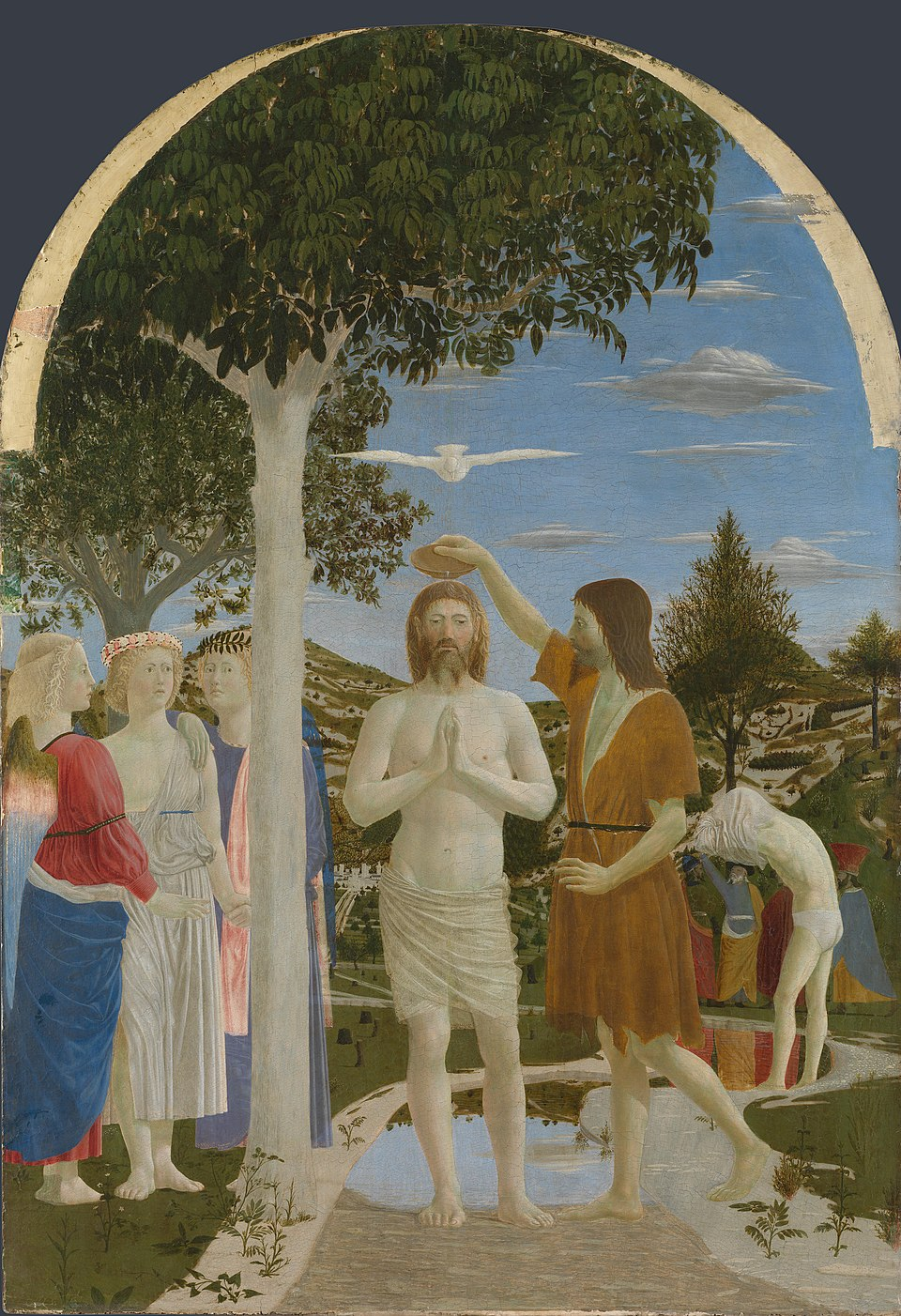
“A fifteenth-century painting is the deposit of a social relationship.”
— Michael Baxandall
Baxandall was one of the most important art historians of the later twentieth century, especially for Renaissance studies, and his work reshaped the social history of art through precision. His great gift was to show that style is not floating visual essence but an index of habits, institutions, contracts, education, religious expectation, and systems of exchange. This opening line moves the painting out of the museum trance and back into the world of patrons, makers, uses, and negotiated meanings. Historically, that was part of a broader turn away from purely formal or biographical accounts toward more social and anthropological ones.
“The grid announces, among other things, modern art’s will to silence,
its hostility to literature, to narrative, to discourse.”
— Rosalind Krauss
Rosalind Krauss brought a different level of conceptual pressure to postwar art criticism. Through Artforum, through October, and through her writing on modernism, photography, sculpture, surrealism, and the post-medium condition, she made formal structures newly legible as intellectual structures. “Grids,” her famous 1979 essay, takes one of modernism’s most apparently neutral forms and reveals the ambition lodged inside it. The grid is not simply a compositional convenience or an impersonal scaffold. It stages a refusal. Narrative, literature, symbolism, discourse, all the noisy inheritances of older pictorial orders, are held at bay by its regularity and repetition. “Will to silence” is an especially rich phrase, because silence here is not emptiness but program. One hears in it discipline, negation, and purity pursued almost to fanaticism. Krauss excelled at this kind of reversal, showing that the most austere structures were often the most ideologically charged. After her, modernist restraint cannot easily masquerade as innocence, it carries its polemics visibly, once one has learned where to look.

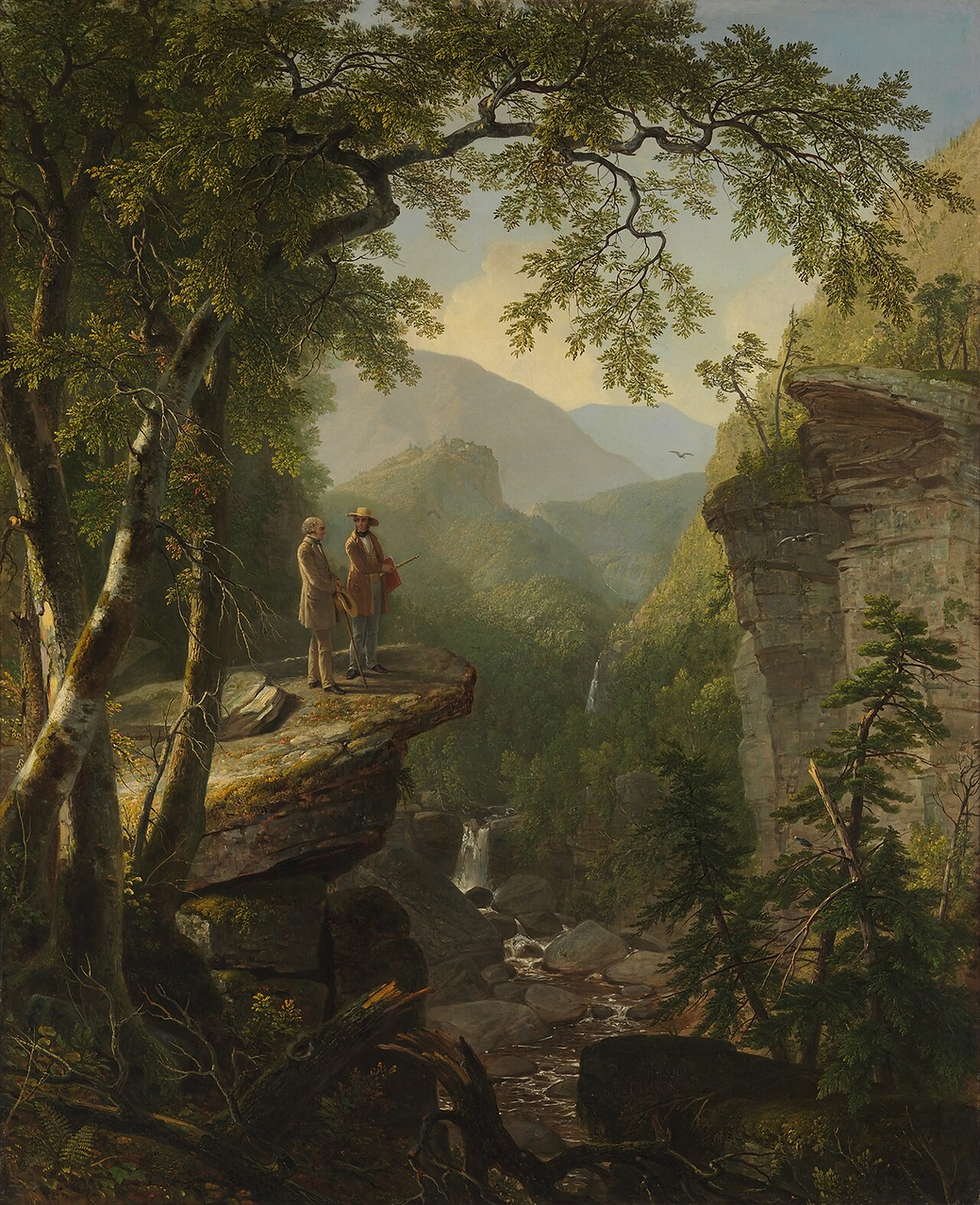
“Landscape is not a genre of art but a medium.”
— W. J. T. Mitchell
Mitchell entered art history from the wider field of visual culture and literary theory, and that crossing of borders is part of what gave his writing its voltage. By the time Landscape and Power appeared in the 1990s, the old innocence of landscape had become increasingly difficult to sustain. Scholars were rethinking empire, nationalism, land use, identity, ecology, and the politics of representation. Mitchell’s sentence cuts straight through the genteel habit of treating landscape as a pictorial category, one more shelf in the museum taxonomy. A genre is something one can sort. A medium is something through which values, desires, hierarchies, and fantasies move. With that shift, landscape stops being a lovely view and becomes an instrument. It is no longer just what is represented, but a way of organizing relations between human and nonhuman worlds, possession and belonging, nature and ideology. The sentence performs an enlargement, the field suddenly widens from painting and photography into settlement, labour, colonialism, tourism, garden design, property, and national myth. After Mitchell, landscape no longer sits quietly on the wall. It starts behaving like a historical force.

“According to John Brinckerhoff Jackson, the father of cultural landscape studies, the etymology of the word ‘landscape’ suggests that it was originally used to describe ‘a composition of man-made spaces on the land.’ Brinckerhoff considers it a mistake to think of landscape as something apart from human society: a landscape is always a synthetic space, a ‘system of space superimposed on the face of the land ….. to serve a community.’”
— Lori Pauli
Lori Pauli, a Canadian curator and writer associated for many years with the National Gallery of Canada, brought this language into especially sharp focus through her work on photography and, in particular, through Manufactured Landscapes: The Photographs of Edward Burtynsky. Her passage does not begin by lamenting industrial damage to some pure outside. instead, it clears the ground conceptually. Landscape was never an untouched elsewhere standing opposite human life. It was already organized land, shaped land, inhabited and administered land, land made legible through use, labour, and communal arrangement. By drawing on J. B. Jackson, Pauli folds cultural geography into photographic criticism and quietly alters the terms of the whole discussion. Burtynsky’s images cease to be photographs of violated nature in any simple sense. They become images of a world in which human systems have long been written onto the earth, though under modern industry that writing becomes monumental, extractive, and often catastrophic in scale. Her prose refuses the sentimental division between nature and society, what emerges instead is a denser, more historically exact field in which landscape is always already social, and therefore always already political.

“Beauty brings copies of itself into being.”
— Elaine Scarry
Scarry, a literary critic and philosopher of aesthetics at Harvard, wrote On Beauty and Being Just at a time when beauty had become somewhat embarrassing in advanced theory, often treated as naïve, conservative, or ideologically suspect. Her intervention was to restore beauty as a serious intellectual subject without sentimentalizing it. This sentence describes beauty not as passive admiration but as generative force. Beauty incites repetition, imitation, response, description, making. We want to draw it, carry it, restage it, speak it onward. Historically, twentieth-century criticism had often preferred difficulty, rupture, or critique over beauty. Scarry did not deny difficulty; she argued that beauty itself can prompt ethical and imaginative extension. In art history, this gives beauty back its dynamism, therefore, beauty does not simply please, it instead propagates attention.

“As we think and write about visual art, as we make spaces for dialogue across boundaries, we engage a process of cultural transformation that will ultimately create a revolution in vision.”
— bell hooks
bell hooks was one of the most important American scholars and cultural critics of the late twentieth century, writing across feminism, race, pedagogy, love, media, and visual culture. In Art on My Mind she brought Black feminist thought into art criticism with unusual warmth, clarity, and political seriousness. This line treats writing about art not as secondary commentary but as part of cultural struggle itself. Historically, that was vital in a field long structured by exclusion, where whose art received attention, whose voices were cited, and whose standards defined value were never neutral questions. hooks understands criticism as an intervention in visibility and freedom. She does not merely ask us to look differently. She asks us to build the conditions under which different ways of seeing become possible.

“Art let us sense the pulse of human commonality that throbs beneath the surface of our days. It tells us that difference is not something to fear. It fosters fellow-feeling and engenders compassion. It cuts through the wall of ego and privilege that we allow to separate us from our better selves. It puts us back in touch with the empathy, decency, and care I believe we were born with.”
— Max Wyman
Max Wyman is one of Canada’s leading cultural commentators, a Vancouver writer and critic who spent decades writing on the arts for Vancouver newspapers and CBC Radio, and whose book The Compassionate Imagination: How the Arts Are Central to a Functioning Democracy extends that work into a broader argument about culture and public life. In this passage, art is not cast as luxury, prestige, or private refinement, but as one of the places where a society recovers its moral and emotional bearings. Wyman moves instinctively toward words like commonality, difference, compassion, empathy, decency, and care, which gives the sentence both its warmth and its political reach. The arts do not erase difference in his formulation; they make it possible to meet difference without fear, and to imagine a civic life less ruled by ego, hierarchy, and indifference. That broader vision runs through the book itself, where culture is placed close to the health of democracy rather than at its ornamental edges.

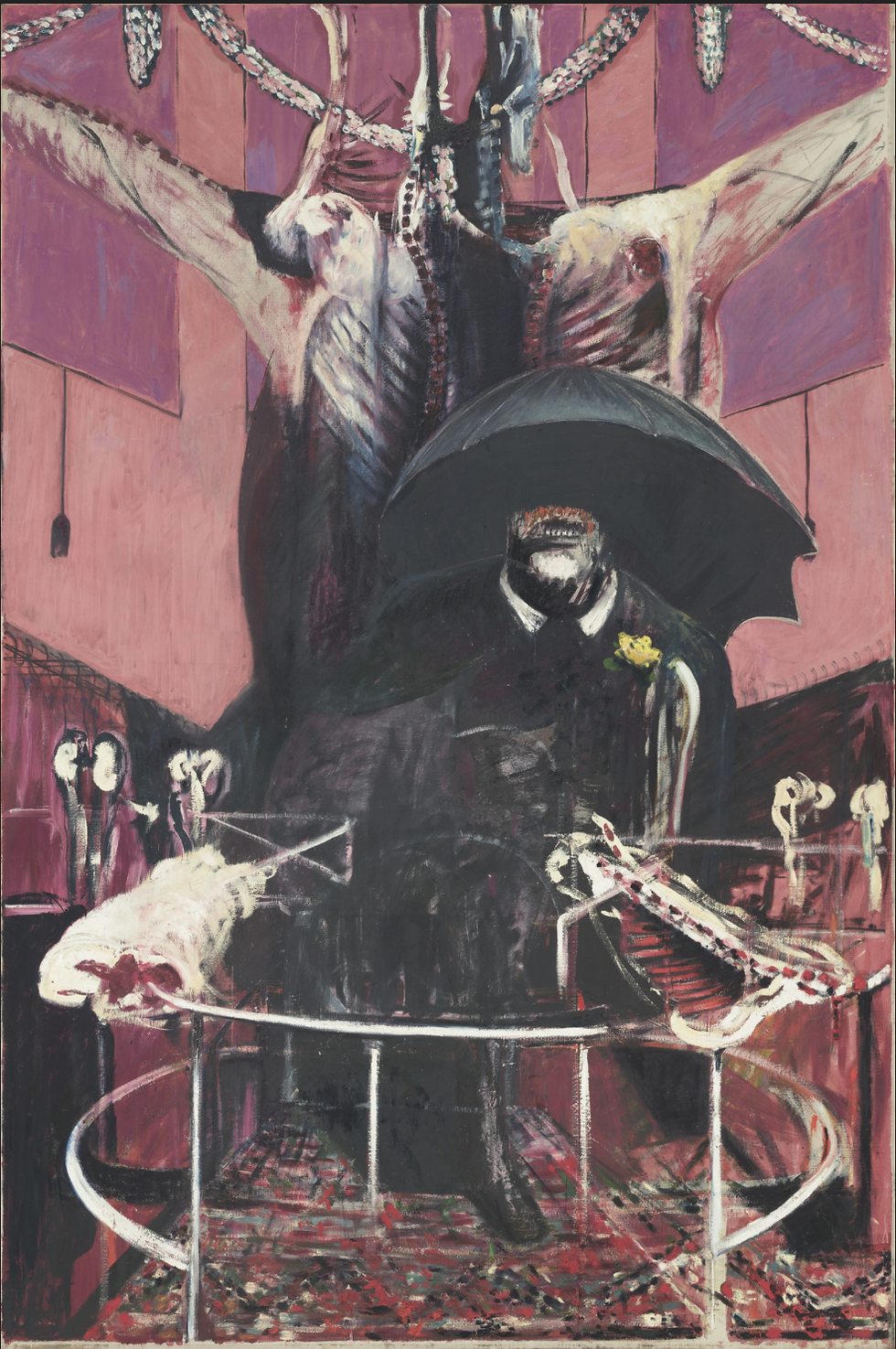
“The greater the artist, the greater the doubt. Perfect confidence is granted to the less talented as a consolation prize.”
— Robert Hughes
Hughes, the Australian-born critic who became a major public voice through Time, The Shock of the New, and decades of combative criticism, wrote with muscular disdain for cant, pretension, market hype, and aesthetic laziness. He belonged to that increasingly rare species, the critic whose writing could move outside specialist circles without losing significance. This line is pure Hughes, wry, scalpel-sharp, and psychologically exact. It overturns the modern appetite for confidence as proof of genius. Under his formulation doubt is not weakness or indecision but one of the marks left by seriousness. The truly gifted artist understands the scale of the problem, the difficulty of form, the insufficiency of every solved passage beside the next unsolved one. Self-certainty, by contrast, becomes a kind of compensation awarded to the merely competent. Hughes admired force, but never confused force with complacency. The sentence has remained in circulation because it catches something that viewers recognise instinctively in great work, its relation to inward pressure rather than self-advertisement.
UPCOMING EXHIBITION
DANIELL MULLEN
ECHOES
Opening: Saturday, April 18th


UPCOMING EXHIBITION
BURTYNSKY: HUMAN/NATURE
Opening: Saturday, May 30th
Invitation Forthcoming


CONTACT US
4-258 East 1st Ave,
Vancouver, BC (Second Floor)
GALLERY HOURS
Tuesday - Saturday,
11:30 AM - 5:30 PM
or by appointment
我们提供中文服务,让我们带您走入艺术的世界。