When Art is Asked to Behave

welcome to our
SATURDAY EVENING POST
May 16th, 2026
By Diamond Zhou
Written with time, thought, and a human pulse.
A conversation about art often begins with one claim and opens onto another. Recently, after hearing Nan Goldin speak with Eva Respini, and after reading a writing by our friend Chris Varley on connoisseurship, I found myself thinking about the same question from two directions: what happens when art is judged by one dominant expectation, whether that expectation is beauty, skill, formal purity, political relevance, or activism?
This is not an argument against political art, nor a defence of art sealed off from the world. It is an argument against the single criterion. Art can be activist, beautiful, formal, private, useful, useless, wounded, devotional, strange, or silent. The danger begins when one of these values becomes the measure by which all art is expected to justify itself.
Chris put the problem plainly. “Critics periodically snipe at connoisseurship as elitist and stuffy,” he wrote, “implying that artistic achievement might be better assessed by other criteria, political relevance or advocacy of social agendas, for example.” He was not dismissing those criteria. He was pointing out that they are still criteria. “I’m fine with their attempts at re-framing,” he continued, “but they reflect preferences too. Connoisseurship is unavoidable.”
That seems exactly right. To judge art by political relevance is still to judge. To value advocacy, social urgency, institutional critique, material skill, formal restraint, beauty, difficulty, originality, or moral courage is still to choose one value over another. None of these values is neutral. The important question is not whether we judge, because we always do, the important question is what kind of judgment we are making, and whether it is broad enough to recognize the many ways art can matter.
Chris makes a wonderfully ordinary comparison: “You exercise it whenever you choose a piece of fruit. And if you admire the skill of a violinist, why turn up your nose at the skill of a visual artist?” We recognize quality constantly, in music, language, food, architecture, conversation, even in the way a person sets a table. We may argue over what quality means, and we should, but pretending we no longer care about quality does not make us more sophisticated. It only makes our judgments harder to see.

This is where Nan Goldin’s remarks became interesting to me. She spoke with the force of an artist for whom art and life have never been cleanly separated. Her work comes out of intimacy, addiction, desire, grief, friendship, illness, rage, community, and public witness. When she says that artists are activists, or that institutions must show work that is uncensored, politically relevant, and involved in the conflicts of the present, she is not making a light statement, she is speaking out from the centre of her own life and work.
There is much to admire in that. Art has often been most necessary when it refuses neutrality. Some works are political because history has left them no other honest route, to ask such art to retreat into tasteful distance would be false. Goldin’s own work is important not because activism has been attached to it, but because the activism is inseparable from the photographs, from the people in them, from the acts of looking, loving, remembering, grieving, and accusing. the politics simply live inside the images.
And yet, there is a difference between saying that art can be activist and saying that art must be activist. The first opens a possibility. The second risks becoming a rule.
Art has been asked to behave many times before. It has been asked to pursue beauty, then to abandon beauty. It has been asked to refine form, then to destroy form. It has been asked to be spiritual, rational, national, universal, avant-garde, anti-bourgeois, conceptual, dematerialized, socially engaged, market-resistant, historically corrective, emotionally available, politically legible. Each demand begins with some truth; each can become a confinement. The problem is not activism; the problem is the single criterion.
Chris pressed on this from another angle when he turned to Minimalism and the rejection of touch. “Are displays of virtuosity the problem?” he asked. “Do artists concerned with touch or cadence skirt too close to theatrical performance? Isn’t that faking it?” He then recalled the moment around 1960 when, in Kirk Varnedoe’s formulation (Varnedoe became the chief curator at MoMA), Donald Judd and other emerging Minimalists wanted “to get rid of the hands-on ethic of abstract expressionism… get rid of the idea that the character of art resides in the touch of the artist.” Chris noticed something important in that turn: “There’s something technocratic about the curious idea that the ‘character of art resides in the touch,’ but it resonated for a generation, not just with visual artists, but composers too. Sol LeWitt and Steve Reich had a lot in common."

That is beautifully put because it does not caricature Minimalism as cold, nor does it sentimentalize touch as the last refuge of artistic truth. It sees that one criterion had become suspect, and that another took its place. Judd’s rejection of the gestural hand did not abolish aesthetic judgment. It relocated it. The question was no longer whether the brushstroke carried the character of the artist, but whether proportion, fabrication, objecthood, repetition, interval, surface, and space could produce another kind of seriousness. LeWitt’s instructions and Reich’s phasing procedures likewise did not eliminate taste, their restraint was not the absence of taste, it was another kind of taste.
As referenced by Chris Varley, Marc Mayer’s phrase “scientistic formalism” names one of modernism’s great errors: the belief that art history could be made to resemble a progressive science, as though painting were solving a problem by eliminating the unnecessary. In his essay on Jean-Michel Basquiat and Keith Haring, Mayer reflects on his own earlier formalist training and writes that “the blind taste test has no application in art.” He also describes the “dominance of scientistic formalism within modernism” as something that excluded other revolutionary aspects of modern art, including freedom of expression and personal iconography.
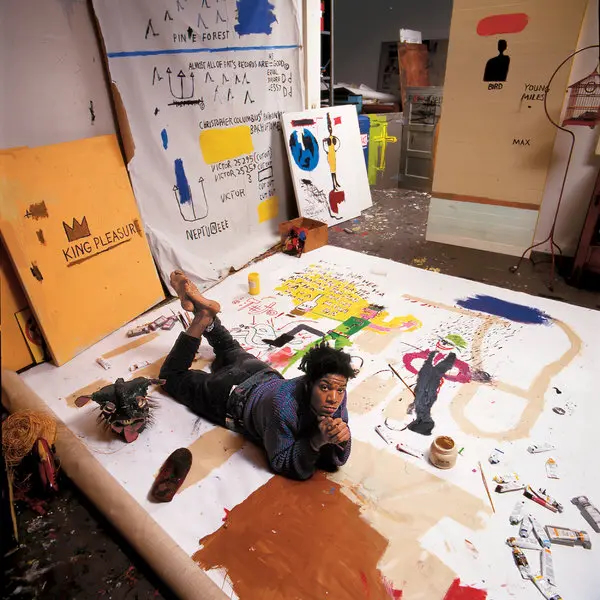
Mayer is not saying that form no longer matters, he is saying that form is not everything. The collapse of narrow formalism should not lead us into narrow moralism. If art is valued only because it is formally pure, then much of life is excluded from the room. Biography, history, violence, class, race, gender, illness, desire, and power become distractions, as though the work could float free from the world that produced it. But if art is valued only because it is politically legible, it becomes another form of narrowing. A work may be urgent and still be thin, it may take the right position and still fail as a successful piece of art or an experience.
The best political art has never worked that way. Goya’s The Third of May 1808 is powerful because the lantern, the white shirt, the bent bodies, the anonymous firing squad, the dark earth, and the terrible closeness between flesh and force produce a scene in which history becomes a terrible thing to examine.

In Manet’s The Execution of Maximilian, he was outraged by Maximilian’s death, that he painted four versions between 1867 and 1868, and that his lithograph of the subject was suppressed by the government censor in 1869. Here politics enters through the broken condition of the work, through repetition, incompletion, censorship, and Manet’s decision to treat a contemporary political execution as a subject worthy of painting. The picture does not behave as polite history painting should behave, it does not stabilize power but exposes power’s theatre.


Picasso’s Guernica’s force comes through compression, distortion, grisaille, scale, scream, fracture, and the refusal of resolution. The Museo Reina Sofía notes that Guernica was commissioned by the Spanish Republican government in 1937 for the Paris International Exposition and is deeply bound to the political events afflicting Europe between the wars. After initially struggling for inspiration, Picasso was deeply moved after he read horrific eyewitness accounts of the April 26, 1937 bombing of the town of Guernica by Nazi German and Fascist Italian warplanes.

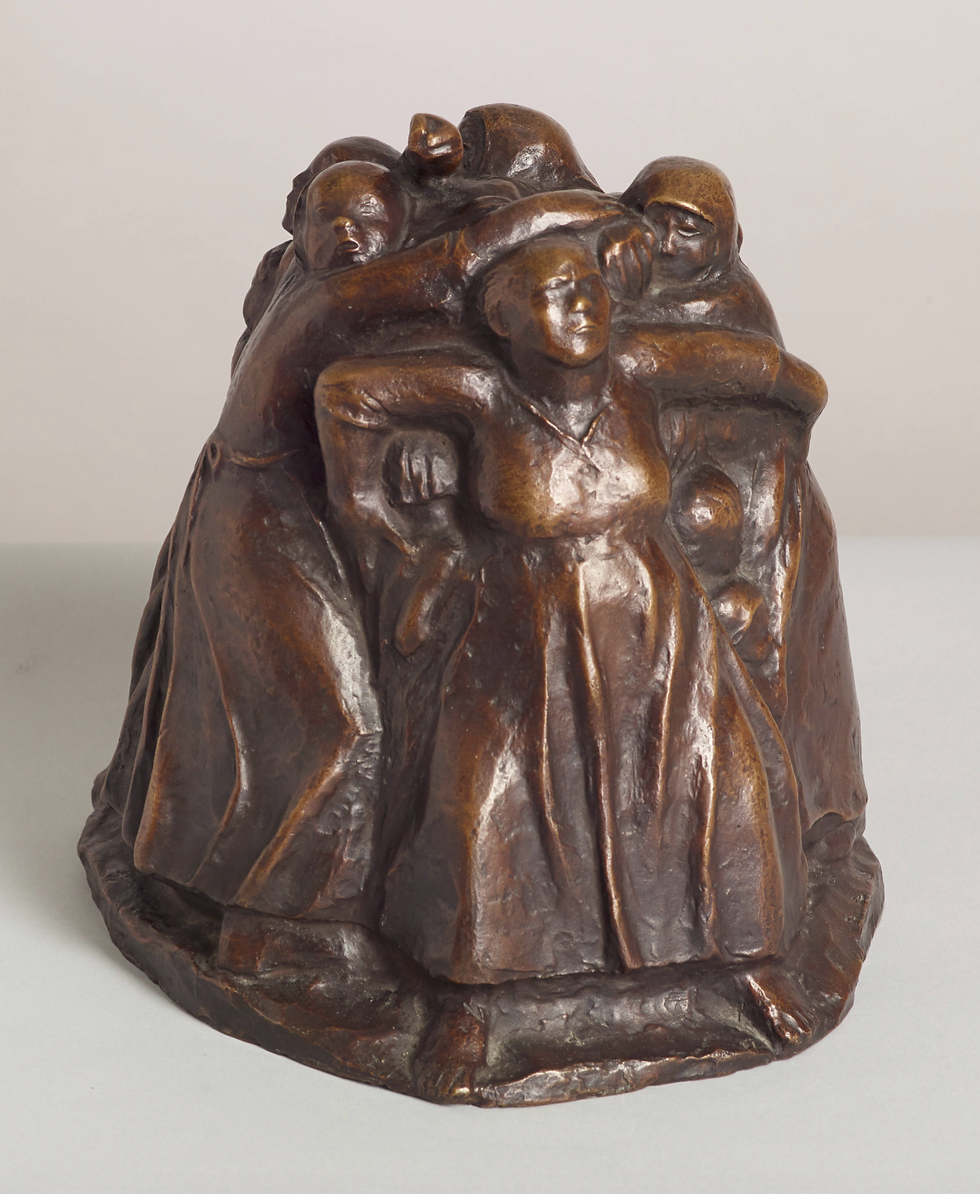
In Käthe Kollwitz’s Tower of Mothers, made in 1939 to 1940, the maternal body becomes shelter, fear, and resistance all at once. The bodies forming a protective wreath around their children with their bodies to ward off dangers looming from outside, and probably also prevent internal threats. Kollwitz’s personal traumatic experience of losing the younger of her two sons in 1914 as a victim of one of the first battles of the First World War had become the catalyst to much of the works that she produces through her lifetime. Kollwitz’s work is socially committed and her politics come through touch, not despite it.
In classical Chinese literati paintings, politics often did not announce itself as politics. It might appear as withdrawal, refusal, eccentric brushwork, a bent tree, an empty pavilion, a bird staring into space, or a fish suspended in blankness. Bada Shanren, also known as Zhu Da, is a remarkable example. The Metropolitan Museum of Art describes him as a Ming imperial descendant who took refuge after the Manchu conquest and “used painting as a means of protest.” In his paintings, the subject always appears simple, but the image is cold, distant, unsettled. Here political feeling survives by refusing public declaration, it is tension, emptiness, misalignment, silence.

That kind of refusal is important now. We are in a moment when institutions are asked, often rightly, to be accountable to history, to community, to trauma, to exclusion, to the demands of the present. They should be brave, they should not surrender to donor anxiety, bureaucratic caution, market politeness, fashion, or fear of offence. They should make room for difficult work, uncomfortable work, work that unsettles inherited histories and refuses polite agreement. But bravery is not the same as obedience to the moral language of the moment. To show only what arrives already justified by political relevance is still a form of caution, though it may look like courage.
Art does not become serious by behaving correctly. It becomes serious when it brings feeling, thought, material, history, and risk to the table. Sometimes that take the form of activism. Sometimes it becomes silence. Sometimes it becomes abstraction, figuration, documentary, myth, beauty, grotesquerie, devotion, refusal, or play. Sometimes it becomes a painting so quiet that its politics live in what it withholds.
Chris’ final question is the right one. When artists move freely again between abstraction and representation, touch and system, figuration and refusal, is this “backsliding,” or have they simply “waved away what former National Gallery of Canada director Marc Mayer called scientistic formalism, and the shaky notion that the history of art should be framed as a march of progress?” That question opens the whole room. The old progress narrative no longer holds, artists are not required to move from representation to abstraction, from touch to system, from painting to object, from object to dematerialization, from aesthetics to politics, as though each step were more advanced than the last. They can move backward, sideways, personally, historically, perversely, tenderly. They can take up what was supposedly exhausted and make it necessary again.
Perhaps the real issue is not whether art should enter the world, but whether we allow it to enter the world in more than one way. Goldin is right that art can be witness and intervention. Chris is right that connoisseurship does not disappear when the criteria change. Mayer is right to distrust the old fantasy of purified formal progress. The difficulty is to hold all three thoughts at once without reducing one to another.
Art can be activist, but not only activist. It can be beautiful, but not only beautiful. It can be formally rigorous, but not only formal. It can be useful, but not only useful. It can be private, devotional, erotic, unresolved, austere, comic, wounded, obscure, excessive, or quiet.
The moment we decide in advance what art must do, we may already have stopped looking.
UPCOMING EXHIBITION
BURTYNSKY: HUMAN/NATURE
OPENING
Saturday, May 30th
1:00PM - 5:30PM
Artist in attendance
This exhibition at Paul Kyle Gallery offers a powerful survey of Edward Burtynsky work, revealing the complex and often uneasy relationship between human industry and the natural world through images of striking beauty and consequence. It will be the first major show of his work in Vancouver in over a decade.


CONTACT US
4-258 East 1st Ave,
Vancouver, BC (Second Floor)
GALLERY HOURS
Tuesday - Saturday,
11:30 AM - 5:30 PM
or by appointment
我们提供中文服务,让我们带您走入艺术的界。