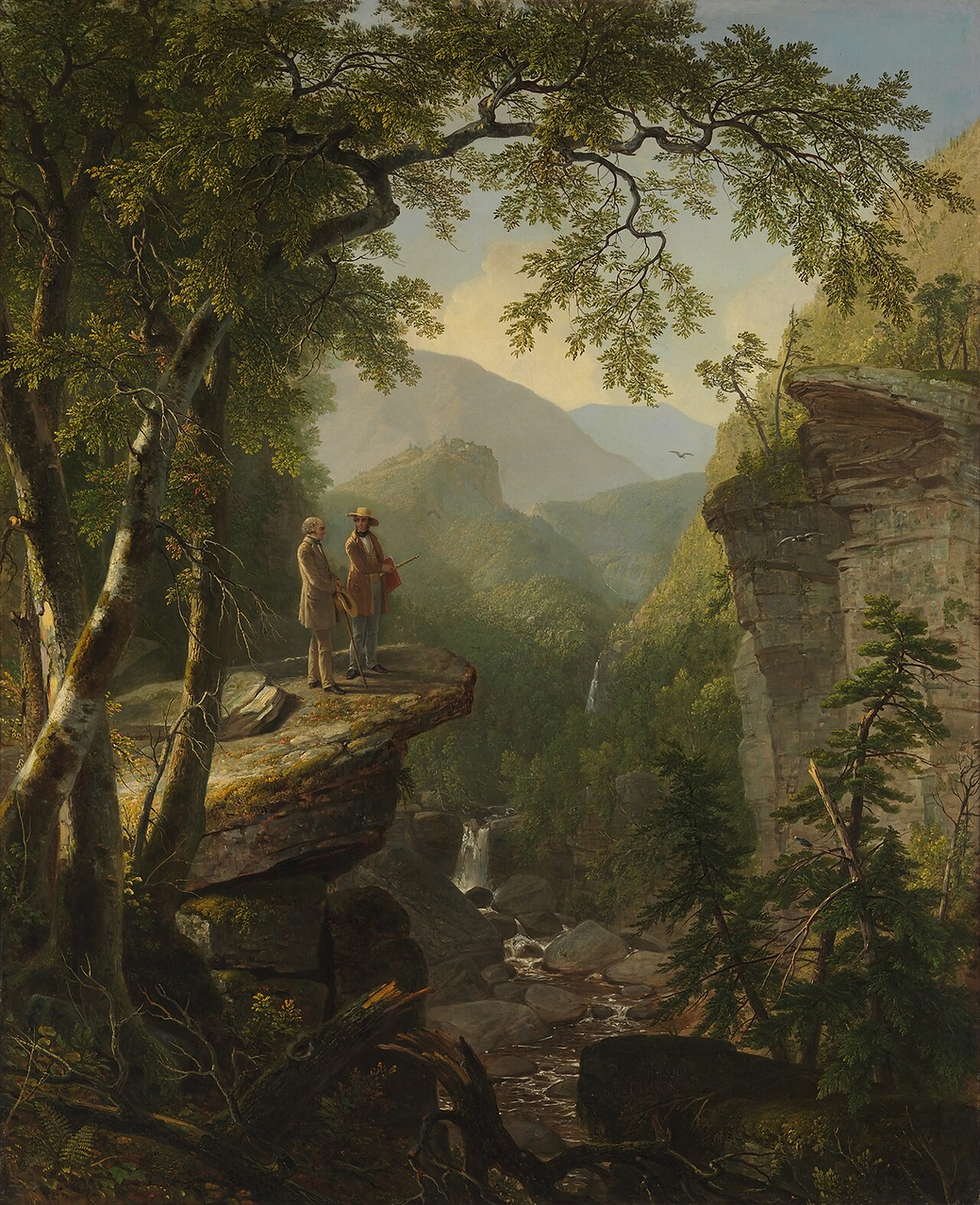
Stillness in Art

welcome to our
SATURDAY EVENING POST
August 1st, 2026
By Diamond Zhou
Written with time, thought, and a human pulse.
We often associate stillness with something easily recognizable, we connect it with silence, emptiness, rest, perhaps even peace, yet none of these is quite sufficient. A silent room may be charged with expectation or tension, an empty landscape may feel exposed rather than calm, and a motionless figure may be inwardly frantic, much like what we occasionally experience. Stillness does not necessarily describe what is happening in an image, more often, it describes what the image does with the concept of time. Certain works seem to suspend the ordinary impatience of looking, they make our desire to move away feel temporarily unnecessary or uneasy.
Stillness is not quite the same as immobility. A person may sit perfectly motionless while the mind races through regret, anticipation, resentment, memory, and desire. Another person may run, dance, work with the hands, or become absorbed in a difficult task and experience an inward quiet so complete that movement is secondary. The body, on its own, tells us very little. Stillness seems to belong instead to the quality of our inner world. Nor is stillness simply another word for peace. Peace implies that something difficult has been resolved, or at least made sufferable. Stillness offers no such assurance, it may present us with something beautiful, but it can also leave us feeling a sense of danger, loneliness, grief.
The subject of stillness is complex. At first, stillness seems to belong familiar images of uncluttered room, solitary figure, quiet horizon, sparse arrangement. Yet, stillness can also occur in the fraction of time before an event, or in the suspended aftermath of one. It can belong to a person who has learned how to be alone, or to someone who has become painfully estranged from everyone.
It is similar in a discussion about the difference between solitude and loneliness. Both turn us inward, and from a distance they may look almost identical. Yet solitude can create an interior space in which thought settles and the world remains available, and in it, one is present. Loneliness also turns inward but cannot find rest there. It returns repeatedly to the missing person, the absent connection, or the imagined life unfolding elsewhere.
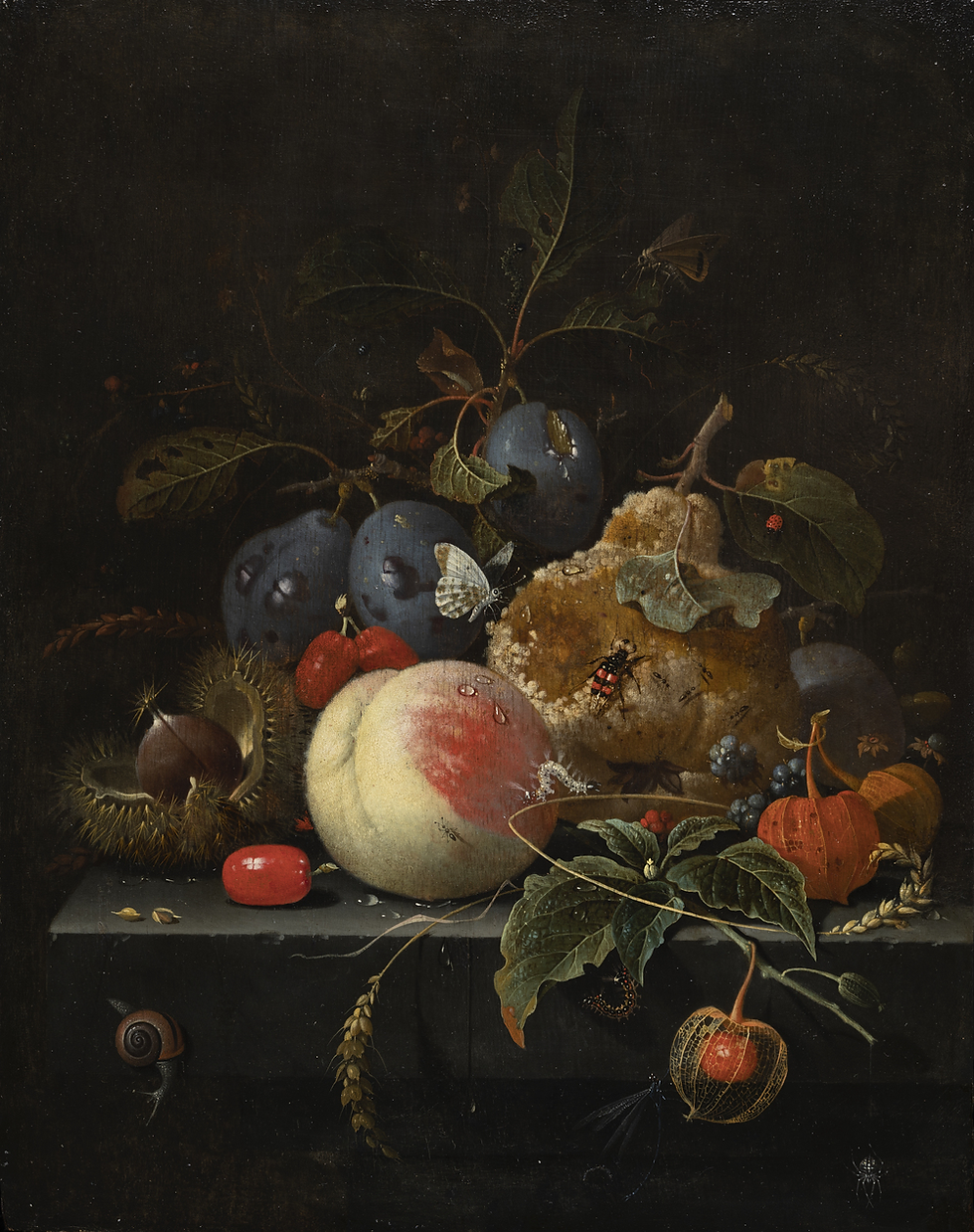
The phrase “still life” seems to offer an obvious entrance into the subject, but it is also misleading. Still life names a genre, not an experience of stillness. Many still lifes are crowded with change. Fruit ripens toward decay, flowers open at the edge of collapse, silver waits to tarnish, and cut meat begins its return to matter. The human figure may be absent, but appetite, commerce, touch, and mortality is everywhere.
The objects have stopped moving only because we have painted them that way, but they have not stopped becoming. In many Dutch banquet and flower paintings, the stillness of the arrangement makes time more visible rather than less. Every beautiful thing has already begun to alter, and the more lavish the display, the more insistently the painting reminds us that abundance is temporary.

Giorgio Morandi removes much of this traditional theatre. He gives us bottles, jars, bowls, and boxes, often dusty, ordinary, and stripped of practical distinction. Their world is shallow, muted, and intensely concentrated. Morandi’s paintings are quiet, but they are not inert. Their stillness feels like an equilibrium reached among separate things. The objects have not simply been placed.
We often read these objects as though they were people. They can appear companionable, reserved, isolated, or dependent, and Morandi’s groupings do tempt us toward a social language. Yet the paintings remain more elusive than a drama performed by bottles. Their emotional force does not depend on turning objects into personalities. It arises from the discovery that distance itself can carry feeling.

Gwen John’s A Corner of the Artist’s Room in Paris extends this stillness into inhabited space. The room is spare: a wicker chair, a small table, an open book, a garment, and light entering through a window. Its occupant is absent, but the room does not feel abandoned. Her habits remain among the objects, and the space seems shaped by repeated acts of sitting, reading, working, and returning. Being alone is a circumstance; solitude is something one manages to make of it, and there is a difference between emptiness and privacy. John’s room does not ask to be filled. It feels sufficient rather than deprived, inward without becoming sealed. The outside world only enters as light.

For Edward Hopper, figures are often motionless, but their stillness has the quality of delay, as though time has continued for everyone else while something in them remains behind. In New York Movie, the audience is in the shared darkness of cinema while an usherette stands apart beneath the elaborate lights of the corridor. Around her, the theatre seems lively. She is only a few steps away from them, yet those steps have become an emotional distance the painting cannot close.
She is not literally alone, which is why the loneliness feels so acute, loneliness is not the opposite of company, it is the felt failure of relation. One can experience it at a party, beside a partner, or among hundreds of people watching the same screen. Hopper’s figures rarely seem at ease inside their own inwardness. Their bodies have stopped but their minds seems to be preoccupied.

Friedrich takes the solitary figure out of the social interior and places him before an almost measureless world. In Monk by the Sea, a tiny dark figure stands against broad bands of shore, water, and cloud. The familiar devices of landscape painting have been stripped away. The monk has almost nothing by which to measure himself. He seems at once intensely present and close to disappearing. Is he lonely, or has he entered a solitude more complete than ordinary life permits? Friedrich refuses to decide for us.
Awe and loneliness both diminish the self, but they do so differently. Loneliness makes the world feel unavailable. It keeps the self painfully central because everything is measured according to what is missing. Awe may be frightening, but it interrupts that constant accounting. Before something too large to possess, the self remains present without remaining sovereign.
The monk’s smallness can therefore be read as terror, humility, or release. He may be abandoned before an indifferent universe or freed from the exhausting demand to remain its centre. The painting leaves these possibilities suspended and its stillness lies partly in that refusal to resolve them.
Stillness often overtakes us in moments of awe, like the monk by the sea: beneath a mountain whose scale makes the idea of conquest inconceivable, far out at sea when land has vanished, or in the opening notes of music that send a tremor through the body. Horror produces a related suspension, in the instant before something happens, anticipation becomes crippling.
The body becomes still because the experience exceeds our ordinary capacity to contain it. Awe, humility, fear, and wonder converge in a single physical response. Stillness, then, is not necessarily a quality represented in a work of art, it is rather, a condition produced in the viewer.
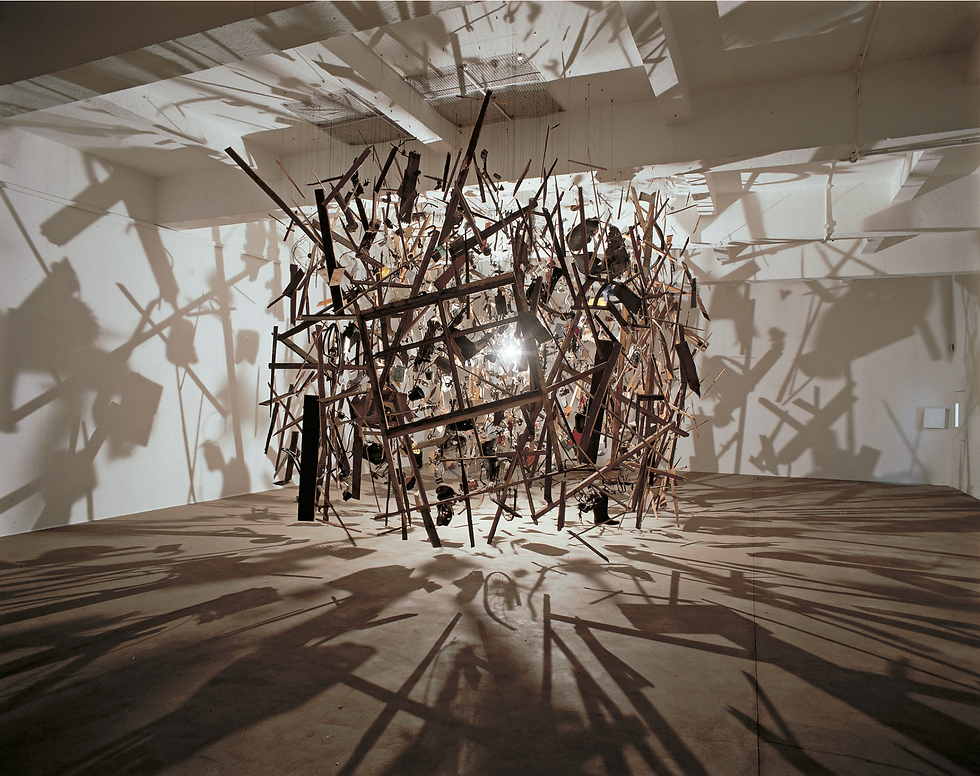
Cornelia Parker’s Cold Dark Matter began with a garden shed filled with ordinary objects and blown apart by the British Army. Parker suspended the fragments around a central light, fixing the explosion in three dimensions. The shed never completes its transformation into debris, and it remains caught at the instant when shelter becomes rupture. Parker’s work resembles a held breath because the violence does not settle, it remains permanently unresolved, neither occurring nor over. Stillness preserves the event by refusing it the relief of conclusion.


Barnett Newman’s Vir Heroicus Sublimis is an enormous red field interrupted by a small number of vertical bands, or “zips.” In reproduction, the painting can appear austere and manageable. In physical proximity, it ceases to behave like an ordinary picture. The red enters peripheral vision, while the verticals become measures against which the viewer registers height, position, and distance. Nothing immense is represented, yet immensity is produced between the painted surface and the body. Newman’s sublime does not require a mountain, storm, or ocean. It asks whether colour itself can become all encompassing, and whether a flat surface can alter our sense of physical scale.


Chiharu Shiota’s The Key in the Hand creates monumentality through accumulation. Thousands of keys are suspended within a dense web of red thread above two wooden boats. Objects associated with homes, doors, permissions, and losses are gathered into a single space. One key is ordinary, but thousands become overwhelming. Memory which is often private and invisible, becomes architecture visible. The work is abundant without feeling hurried. The keys remain suspended, caught between possession and disappearance.

James Turrell’s Aten Reign transformed the Guggenheim rotunda into a volume of shifting light. There is almost no conventional object to inspect, no narrative to decode, and no visible gesture of the artist’s hand. Light, normally the condition by which other things are seen, becomes the thing encountered.
In Turrell’s works, colour changes gradually enough where the exact moment at which changes are not recognizable. The familiar rotunda appears to deepen, flatten, or dissolve. Turrell’s monumentality has no apparent scale, and no weight, so stillness becomes a willingness to surrender to changes.
Some of these works clarify the difference between monumentality and spectacle. Spectacle seeks immediate astonishment and rewards the quick recognition of effect. Monumentality, at its strongest, delays response because the body has not yet understood its relation to what it sees. The work does not merely appear large; it makes our usual scale of judgment feel provisional.
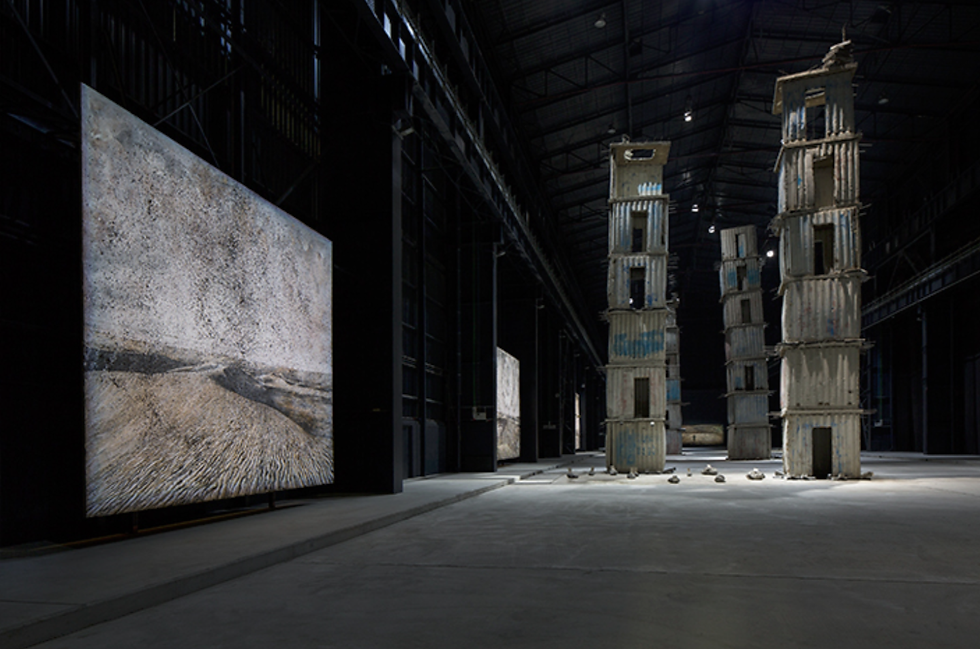

Monumental stillness can also carry the burden of history. Anselm Kiefer’s The Seven Heavenly Palaces consists of immense concrete towers that appear both constructed and already ruined. They seem to have survived catastrophe while remaining permanently close to collapse. Their stillness is not tranquillity but historical weight.


Olafur Eliasson complicates the assumption that stillness must be solitary. The Weather Project filled Tate Modern’s Turbine Hall with mist, mirrors, and an enormous artificial sun. Visitors gathered beneath it, often lying on the floor and watching their reflected bodies above. The work was theatrical and spectacular, yet it produced an unexpected public quiet. Strangers occupied the same atmosphere without needing conversation or intimacy. They remained separate, but their attention was temporarily shared.
This was not the loneliness of Hopper’s usherette, nor the private sufficiency of Gwen John’s room. It was a condition of being alone together. The crowd did not abolish stillness; for a time, it became its form.
Stillness in art cannot be reduced to an identifiable style. It is not guaranteed by empty space, muted colour, sparse composition, or the presence of a solitary figure. It is certainly not the automatic property of every still life. It may emerge from balance, loneliness, withheld violence, perceptual uncertainty, magnitude, ruin, or collective attention.
Perhaps this is why stillness can feel erotic, fearful, and melancholic at once. It places us between possibility and loss, between what may yet happen and what can never happen again. For a brief moment, anticipation and remembrance become almost indistinguishable. We are held there not by emptiness, but by the intensity of what remains unresolved.
CURRENT EXHIBITION


CONTACT US
4-258 East 1st Ave,
Vancouver, BC (Second Floor)
GALLERY HOURS
Tuesday - Saturday,
11:30 AM - 5:30 PM
or by appointment
我们提供中文服务,让我们带您走入艺术的界。