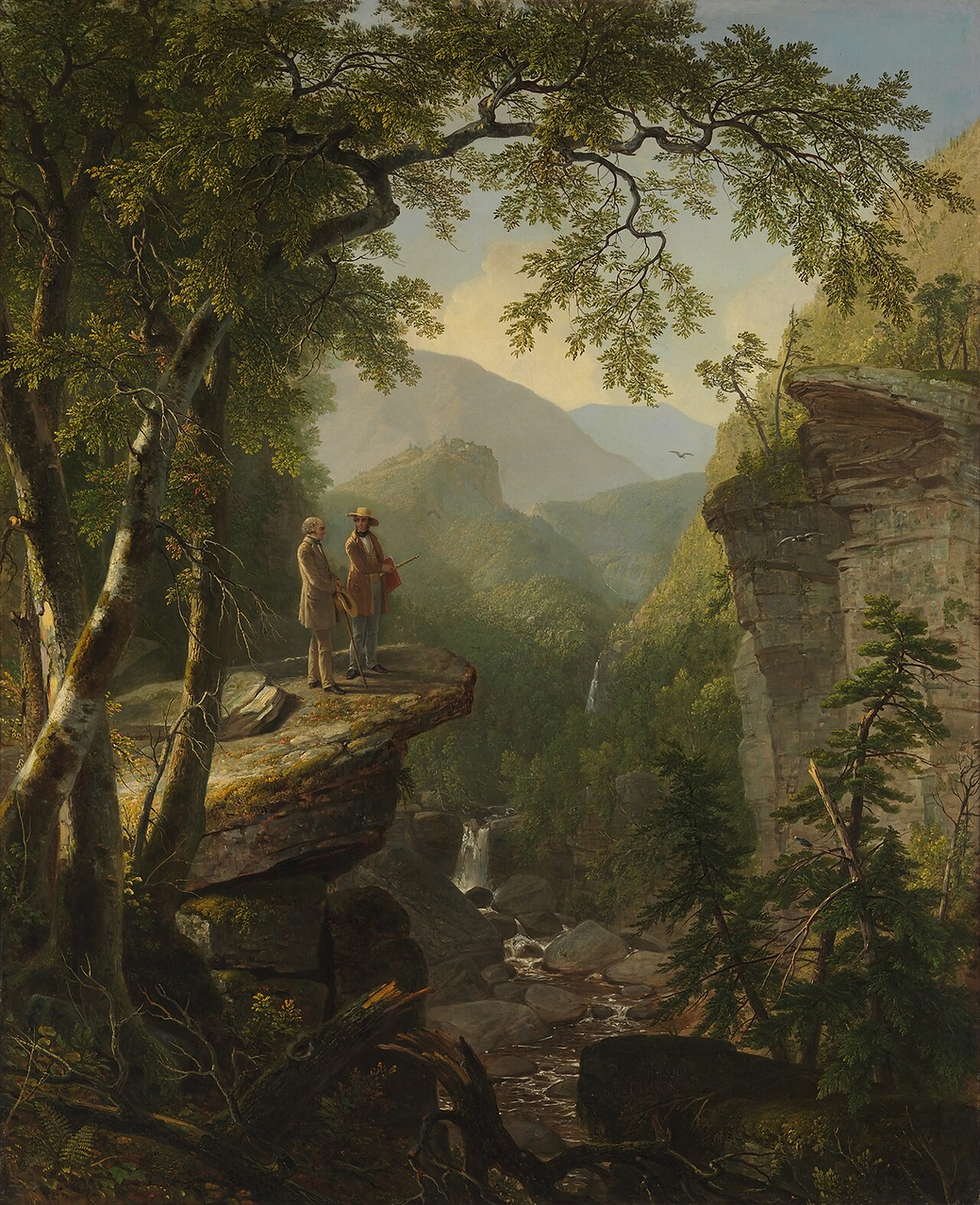
The Forms Memory Takes

welcome to our
SATURDAY EVENING POST
June 6th, 2026
By Diamond Zhou
Written with time, thought, and a human pulse.
Memory is rarely held in the mind alone. It migrates into objects, rooms, landscapes, gestures, photographs, clothing, buildings, streets, and rituals. A key, a field, a wall, a suitcase, a bed, a scarred expanse of land, a garment folded away for decades: each can become a carrier of human presence. Long after an event has passed, memory continues to cling to matter. It survives in the things people touched, the places they altered, the rooms they left, and the silences that followed them.
Art has always understood this migration of memory into form. It does not function the same way that an archive does, though it may borrow from the archive. It does not record as history, though it often carries historical consciousness more intensely than written chronology. Art works through encounter, it makes absence perceptible. It gives tangibility to what might otherwise remain dispersed, buried, inherited without language, or dissolved into the general past. In this sense, the artist does not simply represent memory, the artist creates conditions under which memory can be felt, discussed, and carried forward.

Artists do not always preserve memory by protecting an object in its original form. They may transform it, estrange it, darken it, enlarge it, cast it, suspend it, photograph it, or enclose it. They may draw memory out of a surface, a landscape, a room, or a discarded item. The artwork becomes not a container of information, but a field of experience. It asks the viewer to encounter memory not as something settled, but as something still active.


Anselm Kiefer’s work remains one of the clearest examples of historical memory. Born in Germany in 1945, he came into a world shaped by ruin, silence, guilt, myth, and reconstruction. His works return to the symbolic and material aftermath of European and German history as excavation. Material he uses such as straw, lead, ash, clay, scorched surfaces, broken architecture, and darkened books become carriers of a burdened inheritance. The material itself seems implicated, as though history has entered the surface and cannot be washed out.
Kiefer’s works often possess grandeur, but they do not offer the true release we often seek. Their scale can be monumental, their surfaces visually arresting, yet the force of the work lies in the refusal of resolution. Walter Benjamin’s idea of aura becomes a way of thinking about the charged presence of an object. Kiefer’s works seem to possess the aura of having survived something, even when what they survive is not a literal event but the memory of cultural catastrophe. They do not allow history to become an image or tale viewed from a removed and safe distance, instead, they bring the past into the room with conviction and commitment.
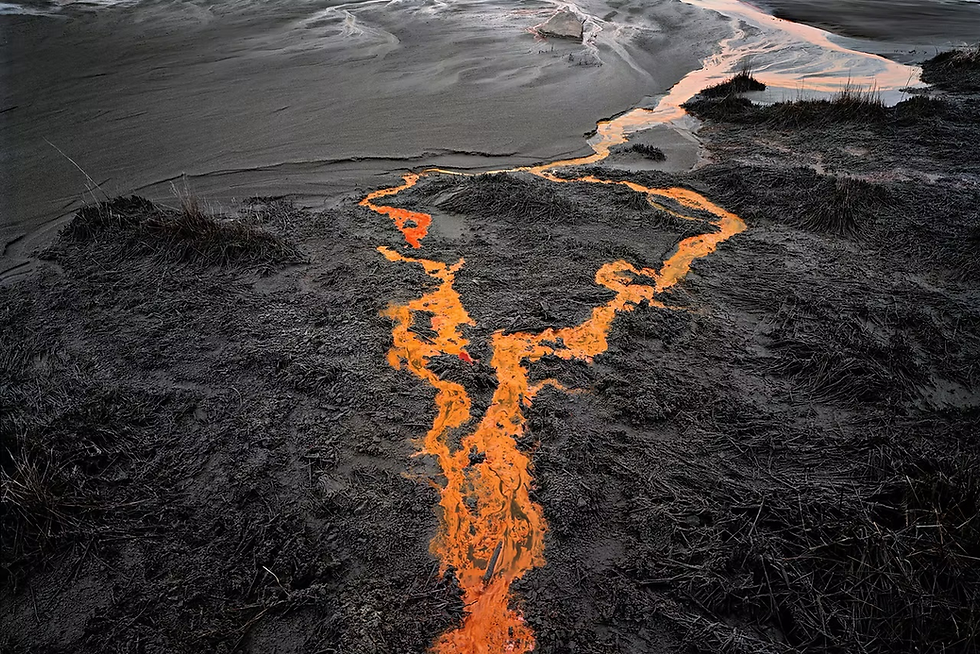

Edward Burtynsky turns the question of memory toward the present. His photographs of quarries, mines, tailings ponds, oil fields, salt pans, shipbreaking yards, agricultural grids, and industrial landscapes reveal a world altered by systems so vast that ordinary perception cannot retain them. We live inside the consequences of extraction, but most of us encounter those consequences indirectly, through materials, infrastructure, energy, and convenience. Burtynsky gives form to the distance between use and damage, he photographs the places where modern life leaves its mark.
His images are unsettling because they often appear ordered, luminous, and formally composed. Pattern and colour arrive before we can recognise them morally. The viewer enters through the photograph’s structure and only gradually confronts the fact that the image is a record of transformation, depletion, labour, appetite, and waste. Beauty is present here, but it is not the subject, it is one of the means by which attention is secured, and also one of the complications of the work. The photograph holds the eye long enough for the altered landscape to become legible evidence.
Burtynsky gives consequence the scale of landscape. His work asks whether a civilization can remember what it is doing while it is still doing it. This is not memory after the fact, but memory in formation. The image becomes a record prepared for a future viewer, perhaps even a future judgment. It shows the earth not as scenery, but as an archive of human action.

Louise Bourgeois moves the inquiry inward, toward the body, the home, and the psychic life of objects. Her work reminds us that trauma is not only public, national, environmental, or collective in visible ways. It may be domestic, familial, bodily, and private, yet still speak to structures of memory shared by many. Fabric, beds, garments, suspended forms, enclosed rooms, bodily fragments, and the works she called Cells do not merely refer to memory. They stage memory as something one inhabits.
In Bourgeois, the home is never simple. It can shelter, but it can also confine. It can contain affection, fear, repetition, secrecy, and return. A garment evokes the absent body; a bed may suggest rest, illness, childhood, sexuality, or vulnerability. Fabric carries associations of repair and tenderness, but also of the body’s fragility. Bourgeois gives emotional memory a structure, not by explaining it, but by allowing objects to retain their ambiguity. Her work understands that the things closest to us often carry the most complicated histories.


Rachel Whiteread approaches memory through absence. By casting the negative spaces of rooms, furniture, staircases, and domestic interiors, she makes the invisible solid. Her sculptures often feel like the memory of a place after use has ended. A room becomes inaccessible, yet its interior volume remains. The air that once surrounded bodies, objects, gestures, and habits is transformed into mass. What is usually unnoticed becomes the work itself.
There is restraint in Whiteread’s language of absence, but it is not cold. Her sculptures suggest that places hold impressions of human life after the body has left. Architecture is not merely a container, it shapes and receives experience, it absorbs repetition, work, rest, conflict, and disappearance. In Whiteread’s hands, absence does not become emptiness.


Doris Salcedo also works from the aftermath of absence. Her sculptures and installations often use furniture, clothing, concrete, steel, wood, and domestic materials altered into forms that feel sealed, wounded, silenced, or made unusable. A chair is no longer only a chair when it stands in for someone who will not return. A table, a wardrobe, a shoe, or a fragment of fabric can become a witness to communal grief without depicting the violence that produced it. Salcedo’s restraint is central to the force of her work. She does not turn trauma into spectacle, she allows objects to bear witness quietly. In doing so, she gives dignity to mourning and recognizes that collective trauma enters the world through ordinary things. A home changes meaning after loss, a street changes meaning after disappearance, a piece of furniture can hold the force of what can no longer be spoken directly.

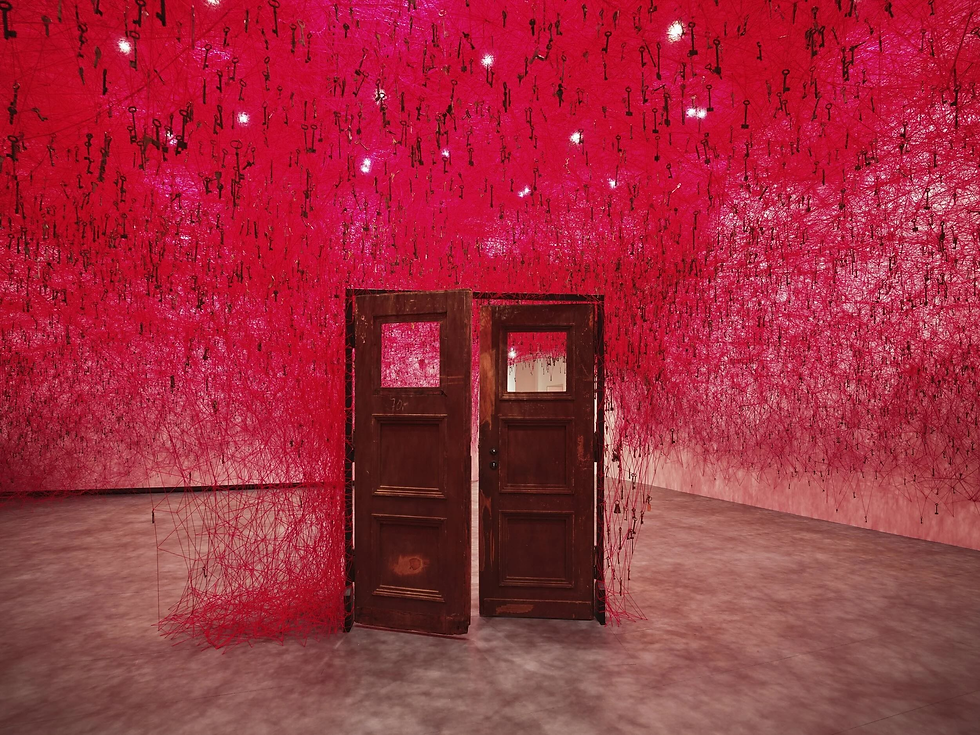
Chiharu Shiota extends this meditation on objects into immersive space. Her installations of thread, keys and founds objects or familiar materials make visible the entanglement between memory, body, and place. The thread functions almost like a nervous system, it binds objects together, suspends them, traps them, protects them, or exposes the invisible tension between them. The result is not simply visual beauty, though the work often has a haunting visual presence. It is the sensation of standing inside memory before memory has been translated into language.
Shiota’s objects are ordinary, but they are never neutral. A key suggests a home, a lock, an entrance, a secret, a hand, a loss. A suitcase suggests departure, migration, burden, and the portion of a life that can be carried. A bed suggests the body at its most vulnerable: sleeping, ill, dreaming, desiring, being born, dying. Her work recognises that objects are not mute when placed within certain context. They become saturated with human implication.
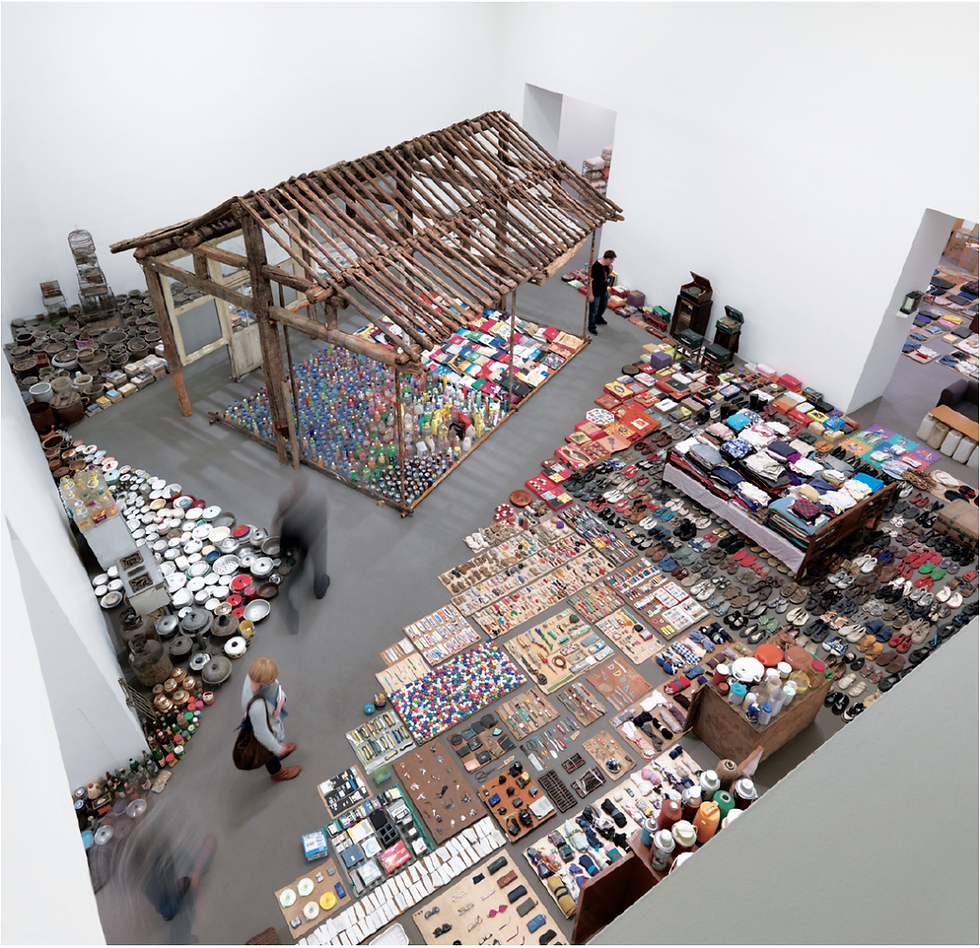
Memory is relational, it does not belong only to the solitary subject looking backward, because it exists between people, between bodies and places, between generations, between objects and the lives that once moved through them. The past is not a sealed chamber behind us, it continues to bind, pull, knot, and return.
Art theory often speaks of the archive, but the archive in contemporary art is rarely a neutral storehouse. Hal Foster’s phrase “the archival impulse” describes a tendency among artists to gather, arrange, and make present histories or fragments that might otherwise remain lost, displaced, or illegible. They turn evidence into encounter and allow the fragment to carry emotional, ethical, and material presence.
However, art cannot redeem what has been destroyed, it cannot repair the earth, return the dead, restore a vanished home, reverse displacement, or make history innocent. It can also fail, especially when trauma becomes aestheticized for viewers who remain safely outside it. The presence of beauty in such work must therefore remain unsettled. Beauty can draw the viewer toward difficult material, but it should not smooth the wound into a pleasurable experience. The artists who handle memory with seriousness tend to preserve its difficulty, they do not offer memory as possession, closure, or lesson.
Trauma does not live only in history books. It lives in landscapes, rooms, bodies, objects, gestures, languages, neighbourhoods, and absences. It lives in what people touched, what they carried, where they slept, where they worked, what they fled, what they built, what they damaged, and what they left behind. Art teaches us to see these carriers of memory before they disappear into the background of ordinary life.
Against forgetting, art does not always make an announcement. Sometimes it collects, casts, photographs, encloses, threads, preserves, or rearranges. Sometimes it gives silence a surface and absence a shape. Sometimes it allows an object to recover the human weight it had almost lost. Through such forms, memory is not merely saved from disappearance, it is returned to the present as something still asking for our attention.
WATCH
Edward Burtynsky in conversation with John O’Brian
For those who were unable to join us in person, we are very pleased to be able to share the recorded conversation between Edward Burtynsky and John O’Brian. It was an extraordinary evening of looking, listening, and thinking together, and we hope this recording allows the conversation to continue beyond the room.
CURRENT EXHIBITION
This exhibition at Paul Kyle Gallery offers a powerful survey of Edward Burtynsky work, revealing the complex and often uneasy relationship between human industry and the natural world through images of striking beauty and consequence. It will be the first major show of his work in Vancouver in over a decade.

CONTACT US
4-258 East 1st Ave,
Vancouver, BC (Second Floor)
GALLERY HOURS
Tuesday - Saturday,
11:30 AM - 5:30 PM
or by appointment
我们提供中文服务,让我们带您走入艺术的界。