Wayne Ngan: The Life of Vessels

welcome to our
SATURDAY EVENING POST
October 24th, 2026
By Diamond Kyle
Written with time, thought, and a human pulse.
A vessel gathers space before it holds anything else. Its walls enclose a small portion of the air we breathe, establishing an interior within the larger world we inhabit. Across their many forms and sizes, vessels give this elementary act of containment a place in human life, holding the things we eat and drink, the flowers we admire, the objects we choose to keep. An opening allows passage between what is contained and what remains outside, and it is often here that our language begins to lend the vessel a human anatomy. We speak of a mouth and neck, of shoulders, a body, and a foot, recognising in its proportions something of our own physical organisation. This habit of description suggests how readily we approach objects through our experience of having a body. A pot can appear to stand, lean, swell, or draw inward. Such bodily familiarity offers a point of entry into Wayne Ngan’s ceramics, where small adjustments to contour and proportion give individual vessels a distinct presence. A compressed shoulder, an interrupted curve, or a glaze that changes character down the body can alter our perception of the whole, drawing attention to the relationship between the space a vessel contains and the shape it presents to the world. The apparent simplicity of the pot accommodates a remarkable range of decisions, each carrying the possibility of changing how we encounter it. Through these relationships, Ngan made pottery a means of thinking about how things acquire individuality, how traditions remain available to change, and how an artist can inhabit the world through sustained acts of making.
In 1970, Wayne Ngan’s first salt kiln collapsed during its inaugural firing. A single cup survived, cracked by a falling brick. Decades later, he showed it to the curator Jesse Birch. Ngan rebuilt, and the cracked cup remained a record of what making pottery could demand. His surviving work invites us to consider the labour behind its apparent ease. A glaze might only be developed based on years of experiments with an unpromising clay, and a few vigorous easy brushstrokes might follow a decade of practice. Understanding the demanding work brings us closer to Ngan’s achievement as an artist, and to the particular pleasure of living with his works.


Born in Guangdong in 1937, Ngan immigrated to Canada in 1952. He endured poverty and racism, supported his studies with night shifts at a shingle mill, and graduated with honours from the Vancouver School of Art in 1963. His 1965 exhibition inaugurating Bau-Xi Gallery included painting, drawing, sculpture, and ceramics. Colour, gesture, and volume remained connected throughout his career, and clay allowed him to work with all three simultaneously. A pot could be painted, carved, assembled, or reshaped, with each decision affecting the others.
He moved to Hornby Island in 1967. With Anne Ngan, a painter and weaver, he built a family home from salvaged materials; he developed his studio with the experimental builder Lloyd House. He also built his own kilns. This involvement gave him considerable freedom to investigate how a vessel could acquired its final character, the kiln’s design and fuel could become as consequential as the shape. His island life provided the space for that work, while his teaching and travels kept it connected to a much wider world.

The words attached to ceramics describe different stages of making. Slip is clay suspended in water, often applied as decoration. Glaze forms a glossy coating during firing, while minerals in the recipe and the oxygen available in the kiln affect its colour. Hakeme names a way of brushing slip. Salt glazing and raku involve particular firing procedures. These definitions explain why Ngan could combine several methods within one work, and why a familiar shape could produce such different results.
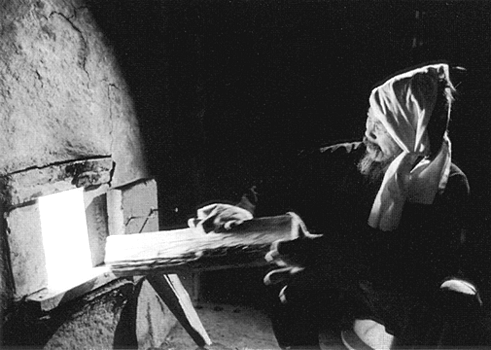
Salt glazing creates its coating inside the kiln. At high temperature, introduced salt vaporises and reacts with the clay surface, producing the characteristic fine dimpling often compared to orange peel. Ngan extended the process by adding seaweed or driftwood to the firebox and blowing fine ash into the chamber to alter the colour. The fire therefore contributed directly to the visible surface. His blue salt-glazed vessels make this especially rewarding to examine, as variations in the coating preserve evidence of a process whose effects could be encouraged without being entirely predetermined.

For raku, Ngan devised a kiln from an oil barrel, raised by a pulley and counterweight, so that he could remove the pots while they were red hot. He then placed them in containers of grasses or other combustible material. Burning consumes oxygen, creating a reducing atmosphere that changes the glaze; smoke and carbon can further darken the surface. This treatment belongs to Western adaptations of raku. Traditional Japanese raku developed around tea bowls removed hot and cooled in the open air. Ngan’s method made timing critical, and abrupt temperature changes could break the pots. The successful pieces retain the effects of those volatile conditions. Their irregular colour records decisions made during firing, when the work was still changing and the opportunity to intervene was brief.

A student brought Ngan clay from the Yukon while he was teaching at Shawnigan. Months of work together yielded Yukon Black glaze. At Camosun College, a teacher offered him a troublesome pile of clay from the parking lot. Ngan loaded 900 pounds into his Volkswagen van and spent years developing what became his oil spot glaze. He ground clay and stone in a ball mill and adjusted his recipes with minerals. The glazes’ beauty depended on recognising possibilities in material that had little apparent value, then committing enough time to understand it.

Oil spot glazes have an important precedent in Chinese ceramics. On Song dynasty Jian tea bowls, iron compounds crystallise to produce metallic-looking spots within the dark glaze. The Japanese term yuteki, or oil drops, describes their appearance. Ngan pursued this historic effect through the materials available to him in British Columbia. While Yukon Black served another purpose, in a recorded discussion, he explained that a dark glaze could strengthen the viewer’s perception of form and proportion, allowing a pot to stand without additional decoration. Glaze was an artistic decision consequential for the entire work.

Wood firing extended his experiments with ash. In 1984, a Canada Council grant supported a large kiln inspired by a Song dynasty model he had seen in Beijing. Ash carried through a wood kiln can settle on the pots and, at sufficient heat, react with the clay to form a glaze. Its distribution varies across the exposed surfaces. Such effects make the firing part of the composition. Ngan also collected Fraser Valley clay that, he told Joni Low, contained ash from the 1980 eruption of Mount St. Helens, and used it to develop a brown glaze. His relationship with landscape could be quite literal: its mineral deposits entered the work itself.

Hakeme begins with a brush rather than the kiln. The method applies pale slip in broad strokes, leaving tracks of bristles and darker clay visible beneath. It belongs to a history of brushed slip decoration associated with Korean buncheong pottery and its reception in Japan. The thickness of the slip, the stiffness of the brush, and the movement of the hand determine how much is deposited. A heavy application leaves a raised, tactile surface; a drier sweep breaks into individual marks. The slip and the glaze remain distinct materials, even when firing makes them difficult to separate by eye.
Ngan first encountered hakeme in a book. Doris Shadbolt records that he experimented for ten years with kitchen brushes and pieces of broom before satisfying himself. The decisive insight came while walking home across Denman and Hornby islands after failing to find a ride. As he walked, he connected the brushwork with the rhythm of his own movement. The story explains something that an image of the finished pot cannot, that the technique became convincing when he could perform it fluently. Its apparent spontaneity rested on prolonged attention to how his body worked.


The hakeme plates also bring his training as a painter into view. Their often painted design asks us to consider composition, pace, pressure of the brush, and the negative space between marks. A repeated format makes these decisions easier to compare, the potter can retain a familiar working structure while allowing each execution to differ. For a collector, several related pieces can therefore be more revealing than a single representative example. Differences that initially seem incidental begin to show the range of an artist’s judgement.


Hakeme Plates, 1.625 x 8.75 x 8.75 inches. Photo by Kyle Juron © Paul Kyle Gallery. Works available, please inquire.
He also made a tool for chattering, which produces repeated indentations around a turning pot. After studying examples in books on Korean pottery, he experimented until the tool’s thickness allowed it to mark the clay without slipping unpredictably. His interest in historical methods reached into these small mechanical details. Learning how a pattern had been made gave him the means to develop it himself.

Ngan threw and altered clay components, then assembled them into more complex works. The wheel supplied a starting point for further construction. Looking across the faceted, flattened, and assembled forms makes the extent of that freedom clear without reducing his career to one recognisable silhouette. His painting and sculpture continued alongside pottery. In 2004 he dismantled the large wood kiln, and the following year built a painting studio in its place. Later visits to Guangzhou included work in bronze and ink painting. He continued making room for new work, quite literally.

His international relationships were equally practical. He studied ceramics in China in 1977 and worked with Yoichi Murakami in Japan in 1978. He admired Shoji Hamada through books, though they never met. He subsequently taught in Taiwan and Chengdu, and built and fired a dragon kiln in Guangzhou. Knowledge moved through workshops, shared firings, and sustained studying. Ngan’s career gives Canadian ceramics a place within that exchange. His work also travelled to audiences in Hong Kong, Taipei, New York, and Geneva. More recently, the Snuneymuxw artist Eliot White-Hill, Kwulasultun, has acknowledged Ngan’s influence and recalled his father’s apprenticeship with him in the 1990s.
Writing for Ngan’s Vancouver Art Gallery exhibition of 1978–79, Doris Shadbolt challenged a habit of granting painting and sculpture expressive significance while judging pots chiefly as useful, well-made objects. Ngan’s work exposes the limitation of that habit. Its physical usefulness can deepen our experience of its artistic decisions. A handle, lid, or painted interior brings those decisions into a relationship with the body and with repeated acts of looking.


Ngan’s inclusion in the Vancouver Art Gallery’s Written in Clay in 2025–26, and his 2025 exhibition Spirit and Form at James Cohan in New York, placed his work within both regional ceramic history and an international contemporary art programme. After his death in 2020, his daughters Goya and Gailan undertook the care of his estate. Gailan developed her own ceramic forms and glazes after helping in his studio from childhood. In 2024 she spoke of plans to use some of his remaining glazes on her sculptures. Goya’s photographs preserve a different record. While documenting a decorated bowl, she removed its contents and arranged them around it: a dried persimmon, stones, glaze tests, sculptural studies, and a Japanese sword guard. The photograph reveals both the bowl’s blue centre and the objects it had held. Finished work and unfinished investigations occupied the same studio, often within the same pot.

For collectors, this is an inviting moment to participate in that work. The range of Ngan’s ceramics supports collections shaped by particular interests, whether in brushwork, firing, or the vessel’s sculptural possibilities. Keeping a work’s provenance, photographs, and the stories attached to it helps future viewers understand what they are seeing. Bringing related pieces together can reveal developments that an isolated object leaves obscure.
Ngan gives us a demanding example of artistic independence: learning from inherited methods, testing them against available materials, and accepting the labour required to make them his own. His pots reward curiosity at every level, from the immediate pleasure of colour to the history of a glaze or the discipline behind a brushstroke. The lasting attraction of collecting his work is the opportunity to live with something that keeps giving us more to notice, and more to understand.
This December, Paul Kyle Gallery will celebrate the breadth of Ngan’s practice with an exhibition drawn from more than 100 works in the gallery’s holdings and Paul Kyle’s personal collection. An accompanying catalogue will also be available.


CONTACT US
4-258 East 1st Ave,
Vancouver, BC (Second Floor)
GALLERY HOURS
Tuesday - Saturday,
11:30 AM - 5:30 PM
or by appointment
我们提供中文服务,让我们带您走入艺术的界。


